About 207 minutes
The champion — Story, Setting & Ideas
Exploration Survival Adventure Tales
47,386 recorded words. 4 minutes difference from this book's estimate.
View Gutenberg source #74435
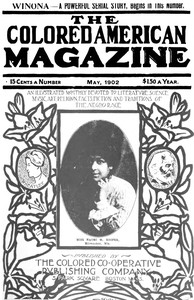
Winona — Text and Context can be approached with a clearer sense of reading commitment from its source measurements: 48,418 words, 3 hr 31 min estimated reading time, and 18 detected text sections.
The text analysis averages about 16.5 words per sentence, while the detected sections provide another way to judge how the source is divided.
Project Gutenberg metadata also associates the work with “African Americans -- Southern States -- Fiction,” connecting these edition facts with the source record’s subject description.
Explore this collection
These alternatives are selected using recorded categories and estimated reading time.
About 207 minutes
Exploration Survival Adventure Tales
47,386 recorded words. 4 minutes difference from this book's estimate.
View Gutenberg source #74435About 243 minutes
Exploration Survival Adventure Tales
55,846 recorded words. 32 minutes difference from this book's estimate.
View Gutenberg source #73590About 257 minutes
Exploration Survival Adventure Tales
59,039 recorded words. 46 minutes difference from this book's estimate.
View Gutenberg source #72258Search stored excerpts and compare books → Choose by your preferences →
Choices use stored catalog measurements. Estimates vary with reading speed. A shared category is a catalog label, not a claim that two books have the same argument or literary quality.
Search reads excerpt text stored with this catalog and links to its associated Gutenberg record. The connection is stored in the site database; this tool does not recheck that every excerpt is word-for-word identical to that external record. Excerpt search does not cover every chapter and does not verify historical publication dates.
Catalog snapshot checked: 2026-09-26. Coverage: 100 public books, 100 available source excerpts.
Calculated from edition completeness, EPUB availability, text structure and catalogue metadata. Not a user rating.
Total of 100 points, scaled to a 2.5-5.0 range. Editions with an empty description or a missing EPUB file are not scored.
Public-domain source text
The source text is kept in the dedicated reader, separate from this catalogue record and its commentary.
The novel opens not in the South but on the Canadian border, where the narrator describes Buffalo in the early 1850s as a cosmopolitan crossroads of Anglo-Saxons, Indians, and free Blacks. The city is an anti-slavery stronghold and a station on the underground railroad. This setting immediately establishes a contrast between the free North and the slaveholding South, a tension that drives the plot. The narrator explicitly states that the story will reveal the artificiality of racial barriers, asserting that social intercourse between races is inevitable.
The opening chapter situates the story in a region where racial boundaries are porous. The narrator notes that many white men, for reasons best known to themselves, sought shelter among the Seneca Indians, adopting tribal dress. One such figure is White Eagle, a medicine man who saved the chief Red Eagle during a cholera epidemic. The text emphasizes that Buffalo’s free air was not polluted by slavery, yet the presence of free Blacks and Indians adds to the city’s diversity. This border setting allows Hopkins to explore interracial relationships and hidden identities, as characters cross lines of race and nationality. The description of the shifting panorama of the streets suggests a fluid social order, where appearances can deceive.
In the excerpts, enslaved characters speak in heavy dialect, as seen in the exchange between Sam and Dan. Their conversation mixes humor with anxiety about a man named Bill, whom they discuss in terms of death and judgment. The dialogue reveals their fear of losing money and their awareness of the dangers they face. The dialect is rendered phonetically, capturing the rhythms of speech. However, the narrative voice itself is formal and literary, creating a contrast between the narrator’s educated tone and the characters’ vernacular. This technique gives the enslaved characters a distinct voice while also framing their speech within a broader commentary on slavery.
Chapter X depicts a lynch mob’s attack on Warren, an abolitionist accused of being a nigger thief. The crowd is described in animalistic terms: their cries are like wild animals, their faces distorted like demons. The narrator compares the mob to hyenas, tigers, and wild beasts, emphasizing the loss of humanity. The scene is graphic: Warren is kicked, spat upon, dragged, and nearly burned alive. The mob’s leader, Bill Thomson, carries the brand to light the pyre. The passage highlights the brutality of slavery’s defenders and the courage of those who resist. The British idea of fair play is invoked as Warren faces thousands alone, a stark contrast to the mob’s savagery.
Readers should attend to how Hopkins uses the border setting to question racial categories, and how the dialect of enslaved characters contrasts with the narrator’s formal prose. The mob scene in Chapter X is a key moment that crystallizes the novel’s critique of slavery. The excerpts suggest a work that is both an adventure tale and a political indictment, but the full arc of Winona’s story remains to be discovered.
That rainy afternoon, Winona — Text and Context left me thinking about how quiet dignity survives chaos. Tracing that thread led me, almost accidentally, to Viola's vanity — Key Ideas to Explore, where vanity isn't shallow but a kind of armor. The two felt like neighbors sharing a fence—different gardens, same stubborn soil.
Your answers remain private and are stored only in this browser.