About 571 minutes
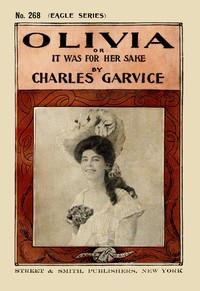
Olivia — Story, Setting & Ideas
Exploration Survival Adventure Tales
131,121 recorded words. 31 minutes difference from this book's estimate.
View Gutenberg source #70446

Before opening Perch of the Devil — Inside the Classic, the edition data offers a quick orientation: 138,328 words, 10 hr 2 min estimated reading time, and 67 detected text sections.
The text analysis averages about 17.4 words per sentence, while the detected sections provide another way to judge how the source is divided.
Project Gutenberg metadata also associates the work with “Social classes -- Fiction,” connecting these edition facts with the source record’s subject description.
Explore this collection
These alternatives are selected using recorded categories and estimated reading time.
About 571 minutes
Exploration Survival Adventure Tales
131,121 recorded words. 31 minutes difference from this book's estimate.
View Gutenberg source #70446About 648 minutes
Exploration Survival Adventure Tales
148,996 recorded words. 46 minutes difference from this book's estimate.
View Gutenberg source #69638About 648 minutes
Exploration Survival Adventure Tales
149,025 recorded words. 46 minutes difference from this book's estimate.
View Gutenberg source #72170Search stored excerpts and compare books → Choose by your preferences →
Choices use stored catalog measurements. Estimates vary with reading speed. A shared category is a catalog label, not a claim that two books have the same argument or literary quality.
Search reads excerpt text stored with this catalog and links to its associated Gutenberg record. The connection is stored in the site database; this tool does not recheck that every excerpt is word-for-word identical to that external record. Excerpt search does not cover every chapter and does not verify historical publication dates.
Catalog snapshot checked: 2026-09-26. Coverage: 100 public books, 100 available source excerpts.
Calculated from edition completeness, EPUB availability, text structure and catalogue metadata. Not a user rating.
Total of 100 points, scaled to a 2.5-5.0 range. Editions with an empty description or a missing EPUB file are not scored.
Public-domain source text
The source text is kept in the dedicated reader, separate from this catalogue record and its commentary.
The novel opens with a striking contrast: Gregory Compton admires the “shining mountains” while his wife yawns and dismisses them. This exchange immediately establishes a tension between romantic idealism and pragmatic discontent, a dynamic that shapes the early chapters. The narrator then provides a detailed backstory for Gregory, noting his mixed heritage—described as possessing “certain characteristics of the higher type of Indian”—and his education at the School of Mines. This background, drawn from the first excerpt, sets up expectations about his character and the social landscape of Butte.
The first excerpt introduces Gregory and his wife in a moment of domestic discord. Her yawn and tart reply—“Pity they don’t shine inside”—reveal a pragmatic, perhaps disillusioned perspective, while Gregory’s poetic reverie hints at a deeper sensibility. The narrator’s aside that she “never forgot that she had won a prize” suggests a calculating side to her affection. This opening scene, with its focus on a single conversation, efficiently establishes the couple’s divergent worldviews and the social context of Butte, where Gregory’s education and Indian-like traits set him apart.
The second excerpt shifts to Rome, where Gregory is involved with a woman named Ora Blake. The narrator describes his past affair with a “brilliant and subtle woman ten years older” and his subsequent disillusionment. Ora is portrayed as “cold fairness” with “brilliant seeing eyes,” and Gregory finds himself drawn despite his resolve to avoid entanglement. This section introduces a more cosmopolitan setting and a different kind of relationship, contrasting with the Montana ranch. The excerpt’s focus on Gregory’s internal conflict—his fear of “another period of torment”—adds psychological depth.
In the third excerpt, Ora observes Ida, Mrs. Compton, flirting with a Roman named Valdobia. The narrator notes Mrs. Compton’s “correct” manner and “calm pride,” but her behavior suggests a strategic charm. This scene, set in a social gathering, highlights the characters’ performative aspects and the subtle games of attraction. The excerpt ends with Ora’s perception of Ida’s “sweet earnestness” as possibly feigned, reinforcing the theme of hidden motives. This passage, though brief, hints at the social complexities that may drive later plot developments.
The excerpts reveal a novel that alternates between intimate domestic scenes and broader social settings. The opening’s focus on a single couple gives way to a more crowded European milieu, suggesting a narrative that expands geographically and socially. The narrator’s voice is omniscient, providing backstory and psychological insight, as seen in the detailed account of Gregory’s past. The excerpts also show a pattern of contrast: between Montana and Rome, between Gregory’s idealism and others’ pragmatism, and between public decorum and private desire. These oppositions likely structure the novel’s exploration of class and marriage.
Readers should attend to how the novel balances its two primary settings—the Montana ranch and European society—and how the characters’ inner lives are revealed through contrast. The excerpts suggest that Atherton uses dialogue and narrative commentary to expose tensions beneath polite surfaces. A first reading may benefit from noting how early descriptions of Gregory’s heritage and education inform his later choices, and how the women’s perspectives complicate the romantic plot.
That rain-soaked afternoon, Perch of the Devil kept me warm, its mining-town contrasts pulling me in. Later, half-dozing, I wondered about the quiet sister left behind in Atherton’s shadows. My fingers found Viola's vanity — Key Ideas to Explore on the shelf, and the afternoon folded gently into another story’s softer, more intimate vanities.
Answer a few questions and save a private reflection on this device.