About 257 minutes
The Spanish farm — Inside the Classic
Exploration Survival Adventure Tales
59,039 recorded words. 1 minutes difference from this book's estimate.
View Gutenberg source #72258
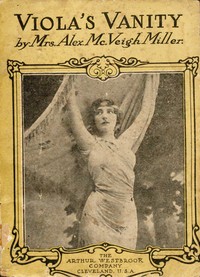
This digital edition of Viola's vanity — Key Ideas to Explore is described by source-level measurements including 59,337 words, 4 hr 18 min estimated reading time, and 43 detected text sections.
The text analysis averages about 20.2 words per sentence, while the detected sections provide another way to judge how the source is divided.
Project Gutenberg metadata also associates the work with “American fiction -- 19th century,” connecting these edition facts with the source record’s subject description.
Explore this collection
These alternatives are selected using recorded categories and estimated reading time.
About 257 minutes
Exploration Survival Adventure Tales
59,039 recorded words. 1 minutes difference from this book's estimate.
View Gutenberg source #72258About 243 minutes
Exploration Survival Adventure Tales
55,846 recorded words. 15 minutes difference from this book's estimate.
View Gutenberg source #73590About 300 minutes
Exploration Survival Adventure Tales
68,781 recorded words. 42 minutes difference from this book's estimate.
View Gutenberg source #69342Search stored excerpts and compare books → Choose by your preferences →
Choices use stored catalog measurements. Estimates vary with reading speed. A shared category is a catalog label, not a claim that two books have the same argument or literary quality.
Search reads excerpt text stored with this catalog and links to its associated Gutenberg record. The connection is stored in the site database; this tool does not recheck that every excerpt is word-for-word identical to that external record. Excerpt search does not cover every chapter and does not verify historical publication dates.
Catalog snapshot checked: 2026-09-26. Coverage: 100 public books, 100 available source excerpts.
Calculated from edition completeness, EPUB availability, text structure and catalogue metadata. Not a user rating.
Total of 100 points, scaled to a 2.5-5.0 range. Editions with an empty description or a missing EPUB file are not scored.
Public-domain source text
The source text is kept in the dedicated reader, separate from this catalogue record and its commentary.
The novel opens not with narrative description but with a newspaper item headlined “SOCIETY BELLE ELOPES,” a choice that immediately establishes the story as public scandal. The article’s breathless tone—calling Viola “the handsomest girl in society” and noting she “assumed the prerogative of woman to change her mind”—frames her elopement as both audacious and trivial. This journalistic gambit lets Miller bypass interiority and plunge readers into the social fallout before Viola speaks a word.
Each chapter opens with a poetic epigraph, a common dime-novel convention that Miller uses to telegraph mood and moral. Chapter I quotes Mrs. Browning—“‘Love me,’ sounded like a jest, / Fit for yes or fit for no”—which primes readers to see Viola’s elopement as capricious. Later, Chapter XXII’s epigraph asks, “Will she love thee as well as I?” in a voice of possessive devotion, directly contrasting with Viola’s proud reserve. These snippets act as a running commentary, often more sentimental than the prose itself, and hint at the author’s judgment of her characters’ actions.
Miller’s dialogue does heavy lifting. When Rolfe brings Viola home, his mother cries, “Oh, Rolfe, what have you done? You have broken dear little Mae’s heart!” The repetition of “broken” and the exclamatory rhythm convey shock without subtlety. Viola’s reply—“I am sorry I have disappointed your wishes for your son, madame”—is icily formal, the word “madame” a deliberate distance. Rolfe, caught between them, uses legalistic phrasing: “before Heaven I never dreamed of such fancies.” The characters speak in emotional absolutes, rarely in shades of gray, which suits the melodramatic form but also creates a brittle, performative quality.
Physical description in the excerpts is sparse but pointed. Viola’s face is a “marble mask in its deep pallor,” a simile that associates her with coldness and artifice. Mae Sweetland, by contrast, is described through action: she “threw up her arms in the air, then sank unconscious to the floor.” The dramatic swoon is a stock gesture, but Miller uses it to polarize sympathy—Mae is all vulnerable body, Viola all controlled surface. The invalid mother’s “sorrowful dark eyes” and “weariness of an invalid” further code moral authority through physical frailty. These descriptions align virtue with visible suffering and vanity with emotional opacity.
By embedding a newspaper article in the first chapter, Miller outsources exposition to a sensationalist voice. The article’s headlines—“Vagaries of a Beauty,” “A Charming Coquette”—label Viola before the reader meets her, establishing her as a public figure whose private choices are spectacle. This technique also speeds the plot: the elopement is reported, not dramatized, skipping the wedding itself. The article’s final line, noting the jilted bridegroom is “désolé,” adds a touch of cosmopolitan detail typical of dime novels set in Washington high society. The newspaper thus functions as both a plot device and a commentary on the era’s appetite for scandal.
Readers attentive to authorial choices will notice how Miller balances sensational plot with moralizing diction. The epigraphs, dialogue, and description work in concert to judge Viola’s vanity even as they revel in the scandal it produces. The novel’s structure—leaping from newspaper report to domestic confrontation—prioritizes emotional impact over psychological depth. Approach the text as a performance of nineteenth-century social anxieties, where every stylistic choice reinforces the tension between individual desire and public reputation.
I’ve often thought Viola’s Vanity keeps its sorrow tucked behind lace, the way old letters hide in drawers. Troubled Waters — A Reader’s Guide knows that ache too—how a woman’s voice trembles when she pretends not to care. They whisper to each other across the shelf, sharing that hush before a storm breaks.
Answer a few questions and save a private reflection on this device.