About 258 minutes
Viola's vanity — Key Ideas to Explore
Exploration Survival Adventure Tales
59,337 recorded words. 1 minutes difference from this book's estimate.
View Gutenberg source #74796
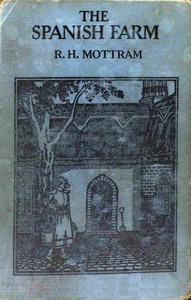
The catalog record for The Spanish farm — Inside the Classic provides practical reading context through 59,039 words, 4 hr 17 min estimated reading time, and 6 detected text sections.
The text analysis averages about 19.4 words per sentence, while the detected sections provide another way to judge how the source is divided.
Project Gutenberg metadata also associates the work with “World War, 1914-1918 -- Fiction,” connecting these edition facts with the source record’s subject description.
Explore this collection
These alternatives are selected using recorded categories and estimated reading time.
About 258 minutes
Exploration Survival Adventure Tales
59,337 recorded words. 1 minutes difference from this book's estimate.
View Gutenberg source #74796About 243 minutes
Exploration Survival Adventure Tales
55,846 recorded words. 14 minutes difference from this book's estimate.
View Gutenberg source #73590About 300 minutes
Exploration Survival Adventure Tales
68,781 recorded words. 43 minutes difference from this book's estimate.
View Gutenberg source #69342Search stored excerpts and compare books → Choose by your preferences →
Choices use stored catalog measurements. Estimates vary with reading speed. A shared category is a catalog label, not a claim that two books have the same argument or literary quality.
Search reads excerpt text stored with this catalog and links to its associated Gutenberg record. The connection is stored in the site database; this tool does not recheck that every excerpt is word-for-word identical to that external record. Excerpt search does not cover every chapter and does not verify historical publication dates.
Catalog snapshot checked: 2026-09-26. Coverage: 100 public books, 100 available source excerpts.
Calculated from edition completeness, EPUB availability, text structure and catalogue metadata. Not a user rating.
Total of 100 points, scaled to a 2.5-5.0 range. Editions with an empty description or a missing EPUB file are not scored.
Public-domain source text
The source text is kept in the dedicated reader, separate from this catalogue record and its commentary.
R. H. Mottram’s The Spanish Farm opens a window onto the French home front during the First World War, but its focus is less on military action than on the steady, tenacious life of Madeleine, a young woman who runs the centuries-old farm. The narrative voice is restrained, often letting small gestures—a shake of the head, a glance in a mirror—carry more weight than direct statement. The pace shifts noticeably between passages of brisk, practical activity and slower, introspective moments, mirroring Madeleine’s own alternation between decisive action and uneasy reflection. John Galsworthy, in his preface, praises the book’s “new form,” neither quite novel nor chronicle, and indeed the structure feels driven by mood and character rather than conventional plot. The excerpts show a writer attentive to the texture of daily life under strain, and to the quiet, often unspoken negotiations of love, duty, and self-interest.
The narrator of The Spanish Farm maintains a cool, almost clinical distance, yet the prose is never cold. Details are chosen for their revelatory power: Madeleine “shook her head slowly from side to side as she hooked her fur under her chin and surveyed herself in the little glass.” The action is mundane, but the rhythm—the slow shake, the careful hooking, the self-survey—suggests a woman weighing her options, asserting control. When she later turns on her elderly suitor with “blazing, magnificent” arrogance, the shift from contained to explosive is prepared by such small accumulations. The narrator rarely explains motives; instead, we infer them from what Madeleine does and fails to do. This restraint gives the characterization a solid, unromanticized feel, exactly what Galsworthy calls “firm as ever stood on excellent legs.”
The tempo of the prose changes markedly with Madeleine’s emotional state. In the aftermath of her night with Skene, the narrative slows: “In the gray dawn she was up and about, making coffee, heating water for him to shave, helping clean his endless buckles and straps.” The list of small tasks, each given its own clause, stretches time, making the reader feel the lingering intimacy. Later, when unease sets in, the pace quickens: “Another week passed. Madeleine became uneasy. The strongest emotional impression will not last.” Short, blunt sentences accelerate the sense of time slipping away. This rhythmic variation is not decorative; it enacts the tension between Madeleine’s desire to hold onto a moment and the relentless forward push of war and daily obligation. The narrative never rushes through her practical routines, but when her thoughts turn to loss or resentment, the prose becomes terse, almost breathless.
Throughout the excerpts, characters communicate through physical actions that carry more meaning than their words. Madeleine “wound her bare arms round his head and stifled his questions and doubts against the present reality of her tangible self.” The gesture is both tender and forceful, a way of silencing doubt with the body. Later, she “averted her face” when asked about a Sunday outing, and “shook her head slowly from side to side” while checking her reflection. These repeated motions—turning away, shaking the head, looking in a glass—form a lexicon of evasion and self-assertion. The narrator does not label her emotions; we read them in the tilt of a chin or the pause before a reply. This reliance on physical detail over interior monologue gives the character a density that feels earned, not explained. It also aligns with the novel’s broader interest in what people do rather than what they say they feel.
Readers coming to The Spanish Farm should attend to the spaces between events—the moments when the narrative slows to observe a hand adjusting a fur collar or a head shaking slowly. These are the hinges on which character turns. The book rewards patience with a portrait of resilience that is neither heroic nor sentimental, but stubbornly, minutely real. Let the prose set its own pace; it knows when to hurry and when to linger.
There’s something about The Spanish Farm — Inside the Classic that stayed with me quietly, like Madeleine’s stubborn grip on her land amid all that passing chaos. It reminded me of another story’s lonely pull, The sailor hero — Text and Context, where character unfolds through small, hard choices rather than grand speeches. Both left me thinking about how we hold ourselves steady when everything around us shifts.
Save your reaction, strongest insight, and memorable passage.