About 602 minutes
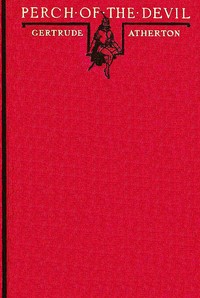
Perch of the Devil — Inside the Classic
Exploration Survival Adventure Tales
138,328 recorded words. 31 minutes difference from this book's estimate.
View Gutenberg source #69429
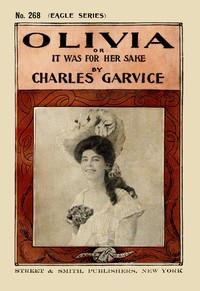
Before opening Olivia — Story, Setting & Ideas, the edition data offers a quick orientation: 131,121 words, 9 hr 31 min estimated reading time, and 41 detected text sections.
The text analysis averages about 13.5 words per sentence, while the detected sections provide another way to judge how the source is divided.
Project Gutenberg metadata also associates the work with “English fiction,” connecting these edition facts with the source record’s subject description.
Explore this collection
These alternatives are selected using recorded categories and estimated reading time.
About 602 minutes
Exploration Survival Adventure Tales
138,328 recorded words. 31 minutes difference from this book's estimate.
View Gutenberg source #69429About 648 minutes
Exploration Survival Adventure Tales
148,996 recorded words. 77 minutes difference from this book's estimate.
View Gutenberg source #69638About 648 minutes
Exploration Survival Adventure Tales
149,025 recorded words. 77 minutes difference from this book's estimate.
View Gutenberg source #72170Search stored excerpts and compare books → Choose by your preferences →
Choices use stored catalog measurements. Estimates vary with reading speed. A shared category is a catalog label, not a claim that two books have the same argument or literary quality.
Search reads excerpt text stored with this catalog and links to its associated Gutenberg record. The connection is stored in the site database; this tool does not recheck that every excerpt is word-for-word identical to that external record. Excerpt search does not cover every chapter and does not verify historical publication dates.
Catalog snapshot checked: 2026-09-26. Coverage: 100 public books, 100 available source excerpts.
Calculated from edition completeness, EPUB availability, text structure and catalogue metadata. Not a user rating.
Total of 100 points, scaled to a 2.5-5.0 range. Editions with an empty description or a missing EPUB file are not scored.
Public-domain source text
The source text is kept in the dedicated reader, separate from this catalogue record and its commentary.
Charles Garvice's Olivia; or, It Was for Her Sake (1902) opens a scene of gift-giving that immediately establishes a pattern of restrained emotion and physical restlessness. The squire presents a set of pearls to his daughter, and Olivia responds with an embrace that is described as 'almost protecting'—a small but telling inversion of the expected parent-child dynamic. Her eyes, however, are 'dry and hot' and wear a 'restless, feverish expression.' This contrast between outward gesture and inward turmoil becomes a structural device: the narrative repeatedly moves from controlled dialogue to descriptions of bodily agitation, especially pacing and wandering.
The excerpt reveals a consistent technique: emotional states are rendered through physical motion rather than interior monologue. Olivia 'wandered about the house and grounds during the day, and paced her room at night, her eyes fixed with a restless unquiet upon vacancy.' This is not a single instance but a recurring motif. The narrative cuts between interior spaces—the study, the dining room—and the grounds of the Grange, using movement to signal psychological pressure. When Bartley Bradstone proposes Faradeane as best man, Olivia keeps her eyes fixed on her plate; the stillness is as telling as the earlier pacing. Garvice builds tension by alternating between constrained social settings and the release of solitary motion.
Dialogue in this passage carries subtext that the narration refuses to gloss. When Faradeane declines the best-man role, citing a prior engagement, Bradstone presses him: 'You don't mean to say that you are not coming to the wedding?' Olivia's response—'Mr. Faradeane says he is engaged'—is flat and avoids eye contact. The narrator reports that she 'looked up for a moment, and past Faradeane, avoiding his eyes.' No character articulates the obvious tension; the reader must infer the history between Olivia and Faradeane from the careful choreography of glances and pauses. This restraint is structural: the story withholds direct explanation, forcing the reader to read between lines of dialogue.
The pearls are more than a gift; they are a narrative device that condenses multiple relationships. The squire says, 'Your mother's jewels are yours by right,' linking Olivia to a maternal legacy, while his own present is 'not so rich as I should like.' The pearls thus carry the weight of paternal love, maternal absence, and financial limitation. Later, the description of Bradstone filling The Maples with 'an army of upholsterers' and making the house 'still more gorgeous' for his bride uses domestic objects to signal his possessiveness and the transactional nature of the match. Garvice does not state that the marriage is a sacrifice; instead, he lets the contrast between the pearls' intimacy and the upholsterers' invasion speak for itself.
Faradeane's role in the excerpt is defined by absence and refusal. He is present at lunch but declines to participate in the wedding. The narrator notes that 'for a moment he was silent' after Bradstone's request, and that his face grew 'paler even than usual.' Yet the narrative never enters his perspective. He remains an opaque figure whose motives are inferred only through physical cues: a compression of the lips, a careful avoidance of Olivia's direction. This structural choice—keeping a key character at arm's length from the reader—creates a vacuum of information that the pacing and restlessness of Olivia's scenes must fill. The story's tension depends on what is not said, and on a third character who hovers at the edge of every conversation.
Readers attentive to Garvice's craft will find that Olivia rewards close attention to its patterns of movement and stillness. The narrative does not explain its characters' inner lives; it shows them through repeated physical actions—pacing, avoiding glances, touching objects. The wedding preparations, the pearls, the refusal of a best man: each scene builds on the last through accumulation rather than exposition. This editorial note has focused on the opening chapters; the full novel may extend or complicate these patterns, but the foundation is laid in these early pages.
There’s something about the pacing in Olivia—that restless movement between rooms and open air—that feels familiar, like a memory of waiting. I found myself thinking of it again while reading about Glen's Creek — Reading Companion, which holds that same quiet watchfulness. Some stories simply understand how we pace through our own silences.
Create a short personal record of your experience with this book.