About 323 minutes
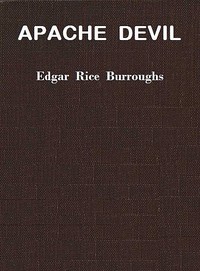
Apache devil — Edition Insights
Exploration Survival Adventure Tales
74,145 recorded words. 23 minutes difference from this book's estimate.
View Gutenberg source #70101
Troubled Waters — A Reader’s Guide can be approached with a clearer sense of reading commitment from its source measurements: 68,781 words, 5 hr estimated reading time, and 9 detected text sections.
The text analysis averages about 12.4 words per sentence, while the detected sections provide another way to judge how the source is divided.
Project Gutenberg metadata also associates the work with “Fiction,” connecting these edition facts with the source record’s subject description.
Explore this collection
These alternatives are selected using recorded categories and estimated reading time.
About 323 minutes
Exploration Survival Adventure Tales
74,145 recorded words. 23 minutes difference from this book's estimate.
View Gutenberg source #70101About 341 minutes
Exploration Survival Adventure Tales
78,352 recorded words. 41 minutes difference from this book's estimate.
View Gutenberg source #72816About 258 minutes
Exploration Survival Adventure Tales
59,337 recorded words. 42 minutes difference from this book's estimate.
View Gutenberg source #74796Search stored excerpts and compare books → Choose by your preferences →
Choices use stored catalog measurements. Estimates vary with reading speed. A shared category is a catalog label, not a claim that two books have the same argument or literary quality.
Search reads excerpt text stored with this catalog and links to its associated Gutenberg record. The connection is stored in the site database; this tool does not recheck that every excerpt is word-for-word identical to that external record. Excerpt search does not cover every chapter and does not verify historical publication dates.
Catalog snapshot checked: 2026-09-26. Coverage: 100 public books, 100 available source excerpts.
Calculated from edition completeness, EPUB availability, text structure and catalogue metadata. Not a user rating.
Total of 100 points, scaled to a 2.5-5.0 range. Editions with an empty description or a missing EPUB file are not scored.
Public-domain source text
The source text is kept in the dedicated reader, separate from this catalogue record and its commentary.
The novel opens with a leisurely description of Larry Silcott, a young man who stops his horse to admire an orchard of apple blossoms. The prose lingers on the heat, the distant Big Horns, and the inviting shade, establishing a setting that is both specific and symbolic. Silcott is introduced as a man who 'followed the line of least resistance,' a trait immediately demonstrated when he decides to trespass for a nap. This opening sets a tone of relaxed observation, but the chapter title 'Among the Apple Blossoms' hints at a pastoral calm that will soon be disrupted.
The first excerpt introduces Larry Silcott not through direct exposition but through his actions and surroundings. The reader learns he is 'handsome,' 'amiable,' and 'anxious to please,' yet the narrator adds that his face shows 'self-satisfaction' and 'smug acceptance.' This duality is reinforced by his decision to steal a nap in the orchard—a small, selfish act that reveals his character. The setting itself, with its 'clouds of soft blossoms' and 'lush deep grass,' contrasts with the 'untempered sun' and 'dusty road,' suggesting a tension between comfort and responsibility. Raine uses the landscape to mirror Silcott's internal state: he is drawn to ease, avoiding the demands of the trail.
The middle excerpt shifts to a tense interrogation between Sheriff Matson and Rowan McCoy. The dialogue is sharp and economical, revealing character through word choice and rhythm. Matson pressures McCoy to confess, offering a deal to save his life, while McCoy responds with cool defiance: 'I reckon I’ll hang.' The exchange is layered with subtext—Matson’s frustration, McCoy’s pride, and the unspoken code of loyalty among the prisoners. Raine uses repetition ('weak link,' 'quitter') to underscore the moral dilemma. The sheriff’s final outburst, 'You damn fool!' is immediately softened by the narrator’s note that 'there was no censure in his voice,' showing that even the antagonist respects McCoy’s integrity.
The progression from the opening’s pastoral scene to the middle’s prison-cell confrontation illustrates Raine’s structural strategy. The novel begins with a seemingly trivial moment—a man taking a nap—then plunges into a life-or-death legal crisis. This juxtaposition suggests that the story will move between personal choices and larger consequences. The later excerpt, though brief, hints at a broader cast: Rogers, Yerby, and Haight are mentioned as fellow prisoners, each with a wife who might pressure them to confess. The narrator speculates on their reliability, creating suspense about who will break. This structure invites the reader to watch for how early character details (like Silcott’s laziness) might foreshadow later actions.
Raine employs a third-person narrator who occasionally dips into characters’ thoughts. In the opening, the narrator offers a direct judgment of Silcott: 'A reader of character might have guessed...' This meta-commentary invites the reader to assess characters actively. In the middle excerpt, the narrator stays close to McCoy’s perspective, noting his internal reactions ('This was news to McCoy, but he did not bat an eye'). The dialogue is rendered without tags like 'he said,' relying on action and tone to convey emotion. The later excerpt shifts to a more omniscient tone, speculating about the prisoners’ wives. This variation in narrative distance keeps the reader engaged, moving from intimate observation to broader speculation.
These excerpts reveal a novel that balances character study with action. The opening’s slow pace and the middle’s rapid-fire dialogue suggest that Raine is as interested in moral choices as in plot. Readers should pay attention to how early details—like Silcott’s ease or McCoy’s defiance—echo later developments. The story’s title, Troubled Waters, hints at the turbulence beneath the surface of these western lives.
Raine’s pacing stayed with me like a quiet porch light—how every conversation nudges the story forward without hurry. The prior claim — A Reader’s Guide reminded me of that same gentle pull, where character voices carry more weight than the plot’s edges. I finished it feeling less alone in how much I notice these small hinges.
Use these questions to collect your thoughts before moving on.