About 451 minutes
The inverted pyramid — Reading Companion
Exploration Survival Adventure Tales
103,590 recorded words. 40 minutes difference from this book's estimate.
View Gutenberg source #72392
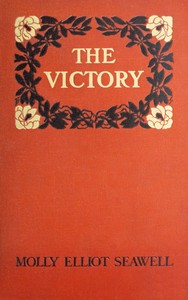
Before opening The victory — A Reader’s Guide, the edition data offers a quick orientation: 112,722 words, 8 hr 11 min estimated reading time, and 27 detected text sections.
The text analysis averages about 20.1 words per sentence, while the detected sections provide another way to judge how the source is divided.
Project Gutenberg metadata also associates the work with “United States -- History -- Civil War, 1861-1865 -- Fiction,” connecting these edition facts with the source record’s subject description.
Explore this collection
These alternatives are selected using recorded categories and estimated reading time.
About 451 minutes
Exploration Survival Adventure Tales
103,590 recorded words. 40 minutes difference from this book's estimate.
View Gutenberg source #72392About 571 minutes
Exploration Survival Adventure Tales
131,121 recorded words. 80 minutes difference from this book's estimate.
View Gutenberg source #70446About 389 minutes
Exploration Survival Adventure Tales
89,463 recorded words. 102 minutes difference from this book's estimate.
View Gutenberg source #73334Search stored excerpts and compare books → Choose by your preferences →
Choices use stored catalog measurements. Estimates vary with reading speed. A shared category is a catalog label, not a claim that two books have the same argument or literary quality.
Search reads excerpt text stored with this catalog and links to its associated Gutenberg record. The connection is stored in the site database; this tool does not recheck that every excerpt is word-for-word identical to that external record. Excerpt search does not cover every chapter and does not verify historical publication dates.
Catalog snapshot checked: 2026-09-26. Coverage: 100 public books, 100 available source excerpts.
Calculated from edition completeness, EPUB availability, text structure and catalogue metadata. Not a user rating.
Total of 100 points, scaled to a 2.5-5.0 range. Editions with an empty description or a missing EPUB file are not scored.
Public-domain source text
The source text is kept in the dedicated reader, separate from this catalogue record and its commentary.
Molly Elliot Seawell opens The Victory with a precise architectural genealogy of the Tremaine family seat, Harrowby. The description moves from the first house, built flat to the ground after Monmouth’s rebellion, to the Jeffersonian addition with its vast entrance hall and lofty ceilings, connected by a narrow corridor that “frankly swears at the first incumbent.” This layered construction mirrors the novel’s own method: the old and new coexist, each era leaving its mark in wood and stone. Seawell’s diction here is deliberate and concrete—she names the rebellions, the architects, the uses of each wing—grounding the story in a physical place that carries history in its very walls.
The opening chapter establishes Harrowby not merely as a setting but as a character shaped by successive generations. Seawell specifies that the original house was built “quite flat to the ground, with the low ceilings and steep, narrow stairs of the seventeenth-century country house,” while the newer addition boasts “spacious rooms, and wide staircases.” The corridor connecting them is described as “frankly swearing at the first incumbent,” a phrase that personifies the building and hints at the tensions between old and new that will animate the plot. This architectural detail is not ornamental; it reflects the novel’s concern with inheritance—of property, of honor, of conflict. The old part of the house, with its “shabby Colonial furniture,” is reserved for men and boys, tutors and dogs, while the modern part hosts guests and grand social events. Seawell uses this spatial division to suggest the gendered and generational boundaries that structure life at Harrowby.
Seawell employs music as a revealing social and psychological tool. In one extended scene, the character Isabey explains his singing ability with a story about being taught by Mario on Lake Constance, and his father’s furious letter: “You do come home immediately at once, now, at present. You shall disgrace yourself by singing in the opera.” The father’s broken English and comically emphatic tone contrast with Isabey’s own polished manner, and the anecdote ends with a reconciliation through song—the father weeping as his son sings a tune from his own childhood. This episode does more than fill backstory; it demonstrates how music can bridge emotional distances and how a gentleman’s accomplishments are carefully calibrated. Lyddon’s remark that singing has “a singular psychic influence upon soldiers” and Angela’s reference to a ship’s shanty man both reinforce the idea that music is a practical, even tactical, skill in times of war.
Angela Vaughn’s dialogue is marked by a playful self-awareness that sets her apart from the more earnest characters. When Lyddon teases her about the Spartans, she deflects by confessing her childhood deceptions: “I would make him read Latin to me just because he reads it so beautifully and would pretend I understood a great deal more than I really did.” This admission is framed as a confession of a “very mean disposition,” yet it reveals a shrewd intelligence. Seawell uses such moments to create a layered portrait of a young woman who is both innocent and calculating. Lyddon’s own dry humor—his murmured prayer for forgiveness for having taught her—adds a wry counterpoint. The exchange is typical of the novel’s dialogue: it advances character without advancing plot, allowing the reader to observe social dynamics in real time.
Though the novel begins with a Christmas scene of apparent peace, war intrudes through news and rumor. Richard arrives “full of news from camp” and reports that Federals are establishing a camp of instruction fifteen miles away. The language is matter-of-fact: “It was not likely, however, that any actual fighting would take place, both armies reserving their forces.” This understatement is characteristic of Seawell’s approach to the Civil War setting. The conflict is present but not yet visible, felt in the movement of troops and the tension in conversation rather than in battle scenes. The domestic sphere at Harrowby becomes a space where war is discussed, anticipated, and prepared for, but not yet experienced. This careful pacing allows Seawell to develop her characters’ relationships and values before the crisis forces them into action.
Readers attentive to Seawell’s craft will notice how she uses physical details—the corridor that swears at the old house, the shanty man on a ship, the father weeping at a song—to build a world that feels inhabited and historically specific. Her dialogue is particularly effective at revealing character through indirection: what is said is often less important than how it is said, and by whom. As you read, watch for the way objects and spaces carry meaning, and how characters’ voices shift depending on their audience. These are the threads that give The Victory its texture.
Reading about the layered quiet of Harrowby, I remembered sitting on a screened porch one humid evening, the house settling around me like a held breath. The way music worked as a hidden language in that novel felt familiar, echoing a similar ache I carried from Glen's Creek — Reading Companion, where even silence seemed to tell a story. It was a strange comfort.
Answer a few questions and save a private reflection on this device.