About 386 minutes
Thrice wedded, but only once a wife — Inside the Classic
Exploration Survival Adventure Tales
88,574 recorded words. 3 minutes difference from this book's estimate.
View Gutenberg source #70837
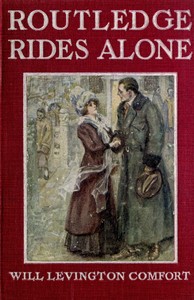
Before opening Routledge rides alone — Text and Context, the edition data offers a quick orientation: 89,463 words, 6 hr 29 min estimated reading time, and 30 detected text sections.
The text analysis averages about 16.2 words per sentence, while the detected sections provide another way to judge how the source is divided.
Project Gutenberg metadata also associates the work with “War correspondents -- Fiction,” connecting these edition facts with the source record’s subject description.
Explore this collection
These alternatives are selected using recorded categories and estimated reading time.
About 386 minutes
Exploration Survival Adventure Tales
88,574 recorded words. 3 minutes difference from this book's estimate.
View Gutenberg source #70837About 373 minutes
Exploration Survival Adventure Tales
85,774 recorded words. 16 minutes difference from this book's estimate.
View Gutenberg source #69341About 341 minutes
Exploration Survival Adventure Tales
78,352 recorded words. 48 minutes difference from this book's estimate.
View Gutenberg source #72816Search stored excerpts and compare books → Choose by your preferences →
Choices use stored catalog measurements. Estimates vary with reading speed. A shared category is a catalog label, not a claim that two books have the same argument or literary quality.
Search reads excerpt text stored with this catalog and links to its associated Gutenberg record. The connection is stored in the site database; this tool does not recheck that every excerpt is word-for-word identical to that external record. Excerpt search does not cover every chapter and does not verify historical publication dates.
Catalog snapshot checked: 2026-09-26. Coverage: 100 public books, 100 available source excerpts.
Calculated from edition completeness, EPUB availability, text structure and catalogue metadata. Not a user rating.
Total of 100 points, scaled to a 2.5-5.0 range. Editions with an empty description or a missing EPUB file are not scored.
Public-domain source text
The source text is kept in the dedicated reader, separate from this catalogue record and its commentary.
Will Levington Comfort’s Routledge Rides Alone (1910) opens with a table of contents whose chapter headings promise a blend of geopolitical intrigue and esoteric philosophy: “Mother India Is Said to be Quivering with Hatred for Her White Child,” “A Singular Power Is Manifest in the Little Hut at Rydamphur,” and “Routledge, Brooding upon the Mighty Spectacle of a Japanese Bivouac, Traces a World-War to the Leak in One Man’s Brain.” The catalog subjects list the Battle of Liaoyang, war correspondents, and international relations, but the excerpts reveal a narrative more concerned with telepathic bonds, “thought-forms,” and a heroine who responds to “immaterial currents” than with battlefield reportage. This note examines the friction between the novel’s advertised historical frame and its actual romantic-mystical core.
The Project Gutenberg record classifies Routledge Rides Alone under “War correspondents – Fiction” and “Liaoyang, Battle of, Liaoyang, China, 1904 – Fiction.” Yet the excerpts show little interest in the mechanics of war reporting. Instead, the heroine Noreen Cardinegh experiences the conflict through psychic distress: “she woke with a scream to find that it was only a dream—that he was being murdered.” The novel’s vocabulary leans toward “immaterial currents,” “four-dimension errors,” and “visible thought-forms.” The battle of Liaoyang appears only in chapter titles, while the interior drama of Routledge’s outcast status and Noreen’s “pilgrimage to Bookstalls” occupies the excerpted pages. The catalog’s emphasis on international relations and military history may mislead readers expecting a Kiplingesque war story; the actual text subordinates geopolitics to a love story mediated by clairvoyance.
Routledge is consistently described not as a journalist but as a wanderer “native of the natives, eternally shadowed from his kind—alone, wasted, accursed.” The street boy Johnny Brodie has “built his future and his God-stuff about Him.” The novel frames Routledge’s isolation as a spiritual condition: he “slipped from a noose in the house at Madras” and is pursued by unnamed conspirators. Noreen’s thoughts dwell on “Routledge-san doing a shameful thing—this was unthinkable, a masterpiece of evil.” The text does not clarify whether this shame is political, moral, or supernatural. The catalog subject “International relations – Fiction” implies a diplomatic thriller, but the excerpts suggest a romance of persecution and hidden knowledge, where the hero’s degradation is a “world’s four-dimension error” rather than a consequence of espionage.
The chapter titles are unusually long and declarative, often summarizing a thematic argument rather than an event: “A Grim and Terrible Tradition Is Touched Upon for the Relation it Bears to the Treachery in India.” This rhetorical habit gives the novel a homiletic quality, as if each chapter were a sermon on imperial guilt or mystical law. The prologue is set in “Cheer Street, London,” a name that may be ironic given the “heart-hunger” and “interminable system of agonies” described. The narrative voice shifts between Noreen’s interior monologue and a detached omniscience that reports “glimpses beyond” ordinary perception. Readers should note that the excerpts contain no direct dialogue from Routledge himself; he is spoken about, dreamed of, and remembered, but never heard. This absence may be a deliberate structural choice, reinforcing his role as an absent center around which other characters orbit.
The excerpts from Routledge Rides Alone suggest a novel that uses the Russo-Japanese War as a distant backdrop for a story about telepathic love, occult persecution, and the spiritual costs of empire. Readers who approach it expecting a war-correspondent adventure will find instead a heroine who “respond[s] to the immaterial currents” and a hero whose battles are fought in the “hidden slums of India” and the “four-dimension errors” of the world. The catalog subjects provide a useful starting point, but the text’s actual preoccupations lie elsewhere—in the “winged, marvelous” glimpses that Noreen cannot force, and in the silence of the man who rides alone.
That rainy afternoon, Routledge Rides Alone kept slipping from my hands—the wanderer’s occult restlessness felt more real than the catalog’s war-correspondent label. Later, drying the pages, I found myself thinking of another quiet, misfiled story, one where the margins hold the true ache. It led me, almost by accident, to Winona — Text and Context, and I simply stayed there until the rain stopped.
Your answers remain private and are stored only in this browser.