About 305 minutes
The confessions of a well-meaning woman — Themes and Context
Historical Psychological Social Fiction
70,120 recorded words. 8 minutes difference from this book's estimate.
View Gutenberg source #71228
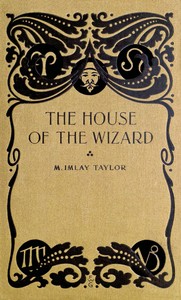
The house of the wizard — Edition Insights can be approached with a clearer sense of reading commitment from its source measurements: 71,774 words, 5 hr 13 min estimated reading time, and 39 detected text sections.
The text analysis averages about 20.9 words per sentence, while the detected sections provide another way to judge how the source is divided.
Project Gutenberg metadata also associates the work with “Historical fiction,” connecting these edition facts with the source record’s subject description.
Explore this collection
These alternatives are selected using recorded categories and estimated reading time.
About 305 minutes
Historical Psychological Social Fiction
70,120 recorded words. 8 minutes difference from this book's estimate.
View Gutenberg source #71228About 297 minutes
Historical Psychological Social Fiction
68,099 recorded words. 16 minutes difference from this book's estimate.
View Gutenberg source #75146About 331 minutes
Historical Psychological Social Fiction
76,127 recorded words. 18 minutes difference from this book's estimate.
View Gutenberg source #74759Search stored excerpts and compare books → Choose by your preferences →
Choices use stored catalog measurements. Estimates vary with reading speed. A shared category is a catalog label, not a claim that two books have the same argument or literary quality.
Search reads excerpt text stored with this catalog and links to its associated Gutenberg record. The connection is stored in the site database; this tool does not recheck that every excerpt is word-for-word identical to that external record. Excerpt search does not cover every chapter and does not verify historical publication dates.
Catalog snapshot checked: 2026-09-26. Coverage: 100 public books, 100 available source excerpts.
Calculated from edition completeness, EPUB availability, text structure and catalogue metadata. Not a user rating.
Total of 100 points, scaled to a 2.5-5.0 range. Editions with an empty description or a missing EPUB file are not scored.
Public-domain source text
The source text is kept in the dedicated reader, separate from this catalogue record and its commentary.
The novel opens with a detailed account of the Carews of Devon, a family whose history is traced from the Norman Conquest to the reign of Henry VIII. The narrative voice is formal and genealogical, emphasizing the family's martial pride and hospitality. The description of Mohun's Ottery as a fortress-like house with tapestries that would rival the king's palace at Greenwich establishes a setting where domestic grandeur and political danger coexist.
From the excerpts, the story quickly moves to a tense confrontation at court. Betty Carew publicly repudiates a precontract of marriage, swearing she would rather wed a beggar than Sir Barton Henge. This scene, with its sharp dialogue and physical threat of violence, introduces a central conflict: the clash between personal will and arranged alliances.
The excerpts reveal a pivotal scene in a mysterious chamber where Queen Anne Boleyn confronts the wizard. The room is described as having a glass roof, crimson walls, and a great mirror. The queen, in white and silver with her hair wild, shrieks treason and accuses the wizard of attempting to slay her. The wizard's calm response—"I can but reveal, and not alter destiny"—suggests that the mirror may have shown her a prophecy. This moment is the emotional core of the excerpts, blending psychological horror with court intrigue.
The queen's terror is visceral: she looks "more like a corpse than one alive." The wizard, named Sanders, remains unruffled, claiming he only obeyed her request to see the future. The scene is left unresolved in the excerpts, leaving the nature of the vision and its consequences to the full text.
Betty Carew is introduced as a young woman who actively resists a precontract made before her birth. In a crowded chamber, she denounces Sir Barton Henge as base and declares her uncle supports her. Simon Raby defends her by striking Henge with a glove, leading to a near-duel that is interrupted by the queen's scream. The language is direct: Betty's speech uses the phrase "veriest beggar at Saint Paul's Cross" to emphasize her rejection.
The scene highlights the precarious position of women in arranged marriages. Betty's agency is limited but forceful; she calls witnesses and invokes Heaven. The male characters—Raby, Henge, Sir Francis Bryan—react with physical threats and honor codes, but Betty's voice cuts through the chaos. The excerpts do not reveal whether her defiance succeeds, but the tension is palpable.
The excerpts embed the story in the material culture of Henry VIII's court. References to Kimbolton, Greenwich, and the Lord Privy Seal (Thomas Cromwell) anchor the fiction in documented history. The queen's presence at a masque or gathering, with masks and mantles, reflects Tudor court entertainment. The wizard's chamber, with its glass roof and mirror, suggests an interest in occult practices that historical Anne Boleyn was rumored to consult.
The narrative voice uses period-appropriate exclamations like "God's death!" and "Hell and damnation!" The pacing alternates between descriptive passages and rapid dialogue. The excerpts do not confirm the wizard's fate or the outcome of the precontract dispute, but they establish a world where prophecy, political allegiance, and personal honor are dangerously intertwined.
Readers should note that the excerpts focus on two dramatic scenes: Betty's repudiation and the queen's terror. The catalog subject "Great Britain -- History -- Henry VIII, 1509-1547 -- Fiction" is accurate, but the novel's emphasis on a fictional wizard and a young woman's resistance to marriage may outweigh strictly historical events. The full text likely weaves these threads together, with the wizard's predictions and the precontract driving the plot toward an uncertain resolution.
Betty Carew’s terror of prophecy, that awful weight of being told who you are, always reminds me of the quieter rooms in Chateau d'Or, Norah, and Kitty Craig — Key Ideas to Explore. There, too, women feel the cold fingers of expectation on their lives, though the walls are different. I’ve held both books close, and they whisper the same sad truth to each other.
A brief reflection can help important ideas stay with you longer.