About 340 minutes
Illustrations of political economy, Volume 8 (of 9) — Text and Context
Historical Psychological Social Fiction
78,049 recorded words. 9 minutes difference from this book's estimate.
View Gutenberg source #74238
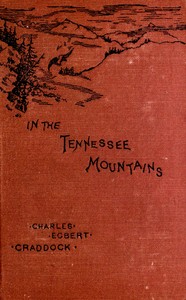
The source record for In the Tennessee mountains — Themes and Context measures this digital text at 76,127 words, 5 hr 31 min estimated reading time, and 11 detected text sections.
The text analysis averages about 21.9 words per sentence, while the detected sections provide another way to judge how the source is divided.
Project Gutenberg metadata also associates the work with “Short stories, American,” connecting these edition facts with the source record’s subject description.
Explore this collection
These alternatives are selected using recorded categories and estimated reading time.
About 340 minutes
Historical Psychological Social Fiction
78,049 recorded words. 9 minutes difference from this book's estimate.
View Gutenberg source #74238About 313 minutes
Historical Psychological Social Fiction
71,774 recorded words. 18 minutes difference from this book's estimate.
View Gutenberg source #70156About 349 minutes
Historical Psychological Social Fiction
80,195 recorded words. 18 minutes difference from this book's estimate.
View Gutenberg source #70986Search stored excerpts and compare books → Choose by your preferences →
Choices use stored catalog measurements. Estimates vary with reading speed. A shared category is a catalog label, not a claim that two books have the same argument or literary quality.
Search reads excerpt text stored with this catalog and links to its associated Gutenberg record. The connection is stored in the site database; this tool does not recheck that every excerpt is word-for-word identical to that external record. Excerpt search does not cover every chapter and does not verify historical publication dates.
Catalog snapshot checked: 2026-09-26. Coverage: 100 public books, 100 available source excerpts.
Calculated from edition completeness, EPUB availability, text structure and catalogue metadata. Not a user rating.
Total of 100 points, scaled to a 2.5-5.0 range. Editions with an empty description or a missing EPUB file are not scored.
Public-domain source text
The source text is kept in the dedicated reader, separate from this catalogue record and its commentary.
The opening of "Drifting Down Lost Creek" establishes a landscape that functions almost as a character: Pine Mountain is a "sombre, changeless mystery," its summit a barrier against the west. The prose moves slowly, lingering on the stream's mundane tasks—turning a mill-wheel, aiding the family wash—before Cynthia Ware's elegiac reflections on leaves and broken wings drifting toward an unseen cavern. This measured, lyrical rhythm contrasts sharply with the rapid-fire dialogue and abrupt shifts in later stories like "Electioneerin' on Big Injun Mounting," where legal arguments and drunken threats crackle with tension. Craddock (the pseudonym of Mary Noailles Murfree) varies pace not only between stories but within them, alternating between panoramic description and tight, colloquial exchanges that reveal character through idiom and gesture.
The first story dwells on natural details with a patience that borders on the hypnotic. Lost Creek "meandering for miles between the ranges, suddenly sinks into the earth, tunnels an unknown channel beneath the mountain, and is never seen again." This sentence itself mimics the creek's movement—long, winding, then abruptly terminal. Craddock uses such descriptions to slow narrative time, inviting readers to inhabit the characters' world of enforced waiting. Cynthia Ware watches "the floating leaves, a nettle here and there, the broken wing of a moth" and wonders where they go; the prose refuses to hurry her meditation. This technique recurs in "The 'Harnt' That Walks Chilhowee" and other tales, where the mountains' stillness becomes a pressure against which human dramas unfold.
In "Electioneerin' on Big Injun Mounting," the pace accelerates through clipped, dialect-heavy exchanges. The store-keeper warns candidate Rufus Chadd that Isaac Boker "air a tremenjous man, an' ez strong ez an ox." Chadd's reply—"I can thrash any man who beats his wife"—is delivered with a "spiritless and languid" voice, yet the narrative notes a "calculating cruelty" in his face. The dialogue moves briskly, but the narrator pauses to dissect Chadd's psychology: his "steely insensibility" from constant exposure to criminals. This alternation between swift repartee and analytical slowdown gives the story a jagged rhythm, mirroring the tension between the candidate's public affability and private hardness.
The electioneering scene demonstrates how Craddock modulates tempo within a few paragraphs. After the store-keeper's conservative remark—"She air his wife"—the narrative slows to examine Chadd's transformation: "the process was insinuating and gradual, but the result was bold and obvious." Then, abruptly, the dialogue resumes with Isaac Boker's drunken interruption: "I ain't a-goin' ter vote fur ye,—nary time." The shift from reflective prose to raw, unpunctuated speech creates a jolt. This technique appears elsewhere: a lyrical description of a mountain sunset might give way to a sudden argument or a piece of folk wisdom. The effect is to keep readers off-balance, alert to the volatility beneath the surface of mountain life.
Readers attentive to pace will notice how Craddock uses the mountains themselves as a rhythmic device: long, descriptive passages that feel like the slow drift of Lost Creek, then sudden rapids of conflict. The stories reward close attention to these shifts, which often signal a character's inner change or an impending crisis. The dialect, too, is not mere local color but a tool for tempo—its clipped phrases and repetitions can either hasten or stall a scene. Approach these tales as you would the landscape: let the slow parts settle, and brace for the quick turns.
Some evenings, sitting with In the Tennessee mountains, I kept thinking about how its people hold their land so tightly, as if the ridges themselves were part of their sentences. Then I remembered another book, quieter in its stubbornness, about a boy learning the same hard lesson in his own corner of the world. Geoffrey's victory; — Key Ideas to Explore feels like an echo of those same steep trails, just walked at a slower pace.
Answer a few questions and save a private reflection on this device.