About 257 minutes
A girl and her ways — A Closer Reading
Historical Psychological Social Fiction
58,897 recorded words. 5 minutes difference from this book's estimate.
View Gutenberg source #75231
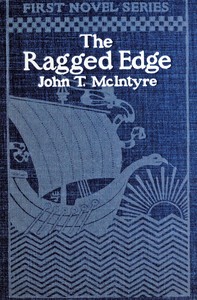
The source record for The ragged edge: A tale of ward life & politics — Reading Notes measures this digital text at 60,224 words, 4 hr 22 min estimated reading time, and 26 detected text sections.
The text analysis averages about 15.2 words per sentence, while the detected sections provide another way to judge how the source is divided.
Project Gutenberg metadata also associates the work with “United States -- Social life and customs -- Fiction,” connecting these edition facts with the source record’s subject description.
Explore this collection
These alternatives are selected using recorded categories and estimated reading time.
About 257 minutes
Historical Psychological Social Fiction
58,897 recorded words. 5 minutes difference from this book's estimate.
View Gutenberg source #75231About 288 minutes
Historical Psychological Social Fiction
66,042 recorded words. 26 minutes difference from this book's estimate.
View Gutenberg source #72355About 290 minutes
Historical Psychological Social Fiction
66,485 recorded words. 28 minutes difference from this book's estimate.
View Gutenberg source #69720Search stored excerpts and compare books → Choose by your preferences →
Choices use stored catalog measurements. Estimates vary with reading speed. A shared category is a catalog label, not a claim that two books have the same argument or literary quality.
Search reads excerpt text stored with this catalog and links to its associated Gutenberg record. The connection is stored in the site database; this tool does not recheck that every excerpt is word-for-word identical to that external record. Excerpt search does not cover every chapter and does not verify historical publication dates.
Catalog snapshot checked: 2026-09-26. Coverage: 100 public books, 100 available source excerpts.
Calculated from edition completeness, EPUB availability, text structure and catalogue metadata. Not a user rating.
Total of 100 points, scaled to a 2.5-5.0 range. Editions with an empty description or a missing EPUB file are not scored.
Public-domain source text
The source text is kept in the dedicated reader, separate from this catalogue record and its commentary.
The novel opens not with a politician but with weary horses dragging trucks homeward, a detail that sets the tone for a story grounded in the physical texture of city life. The first chapter quickly introduces two strands: a personal errand about a will and a political plot involving a street-railway franchise. The young attorney Kerrigan warns reformer Mason that the Motor Traction Company aims to steal rather than purchase the rights to Center and Line streets. This blend of mundane and corrupt—a will discussion sliding into a conspiracy—characterizes McIntyre's method.
Later, the narrative shifts to a deathbed scene where Larry, Rosie, and Mary confront impending loss. The language turns spare and direct: “Philosophy is a meaningless word to such as he.” The political thread recedes, and the focus narrows to personal grief and a promise extracted under duress. The catalog subjects of social life and politics are present, but the excerpts suggest the novel weights personal relationships at least as heavily as political machinery.
The opening chapter introduces political corruption through dialogue rather than exposition. Kerrigan tells Mason that the Motor Traction Company is trying to secure possession of Center and Line streets “not while there’s a chance to steal them.” The phrasing is colloquial and direct, avoiding legal jargon. McIntyre grounds the conspiracy in specific street names and a concrete timeline: the City Railway Company had already secured a franchise, laid road-bed and rails, and then faced an injunction under cover of a citizens’ protest. The excerpt does not reveal the outcome, but the method—using a protest as a pretext—is stated plainly.
The setting reinforces the tone: weary horses, drooping drivers, a red sun between black warehouses. The political deal is not debated in a chamber but mentioned in an office after hours, between a reformer and a friend who “smiled at his friend.” The smile suggests insider knowledge. The catalog subject of political fiction is thus realized through specific, localized detail rather than abstract ideology.
The later excerpt centers on Mary’s deathbed, where she urges Larry to marry Rosie after she is gone. The scene is built on repeated requests and reluctant promises. Mary says, “Promise me that you will think of me sometimes, Rosie?” and then, “try and be a good wife to him, Rosie.” Rosie’s response is initially a sob, then a frantic “Yes, yes, Mary, I will! If it’ll give ye peace, I’ll promise.” The language is plain, with few adjectives. The narrator notes that “Philosophy is a meaningless word to such as he,” referring to Larry’s inability to find comfort in religious imagery—a picture of the crucifixion on the wall brings “no consolation.”
The scene is notable for what it does not show: there is no discussion of politics, no reference to the earlier franchise plot. The two strands of the novel—ward life and personal drama—appear to run parallel, connected only by the characters’ shared world. The deathbed promise may later drive action, but the excerpt leaves that inference to the reader.
McIntyre uses dialect sparingly but precisely. The epigraph is from an old song: “Arrah, me jewel, sure, Larry’s the boy!” The opening chapter’s dialogue is mostly standard English, but later the speech shifts. Rosie says, “Do you think she’s dyin’, Larry?” and Mary says, “Don’t let Larry forget me, either.” The dropped ‘g’ and the syntax mark class and region without becoming a thick dialect that would obscure meaning. The city itself has sound: “From far down the street came a faint, musical drone as of minor voices singing; the bell of St. Michael’s boomed the hour solemnly; quick footsteps went by the house, grew faint and then died away.”
These auditory details create a sense of place that is neither sentimental nor purely functional. The bell and footsteps mark time and distance, while the “minor voices singing” adds an eerie note. The catalog subject of social life and customs is thus rendered through sensory specifics—how the city sounds at night, how people speak under stress—rather than through broad description.
Readers should attend to how McIntyre balances the two promised strands. The excerpts show a novel that moves from a political conspiracy introduced in brisk dialogue to a private deathbed scene rendered in plain, almost stark prose. The connection between these worlds is not yet explicit in the excerpts; the same characters may or may not reappear in both. The title’s “ragged edge” could refer to the margin between poverty and respectability, or between public schemes and private grief. The evidence suggests a work more interested in personal consequence than in political mechanics.
That old ward politics story stayed with me because of how quietly it held its people, even at the edge of everything. It made me think of another book, one that lingers like a half-remembered street corner — A rolling stone — A Closer Reading — where the wandering feels less like escape and more like a slow way of saying goodbye. Some stories just sit beside you after the last page turns. I keep thinking about that.
Your answers remain private and are stored only in this browser.