About 674 minutes
Children of men — Text and Context
Historical Psychological Social Fiction
155,016 recorded words. 13 minutes difference from this book's estimate.
View Gutenberg source #71941
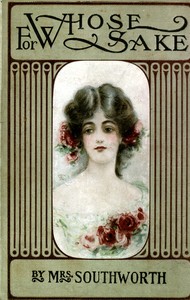
The source record for For whose sake? A sequel to "Why did he wed her?" — A Closer Reading measures this digital text at 151,815 words, 11 hr 1 min estimated reading time, and 41 detected text sections.
The text analysis averages about 16.0 words per sentence, while the detected sections provide another way to judge how the source is divided.
Project Gutenberg metadata also associates the work with “England -- Fiction,” connecting these edition facts with the source record’s subject description.
Explore this collection
These alternatives are selected using recorded categories and estimated reading time.
About 674 minutes
Historical Psychological Social Fiction
155,016 recorded words. 13 minutes difference from this book's estimate.
View Gutenberg source #71941About 699 minutes
Historical Psychological Social Fiction
160,752 recorded words. 38 minutes difference from this book's estimate.
View Gutenberg source #74706About 719 minutes
Historical Psychological Social Fiction
165,238 recorded words. 58 minutes difference from this book's estimate.
View Gutenberg source #69952Search stored excerpts and compare books → Choose by your preferences →
Choices use stored catalog measurements. Estimates vary with reading speed. A shared category is a catalog label, not a claim that two books have the same argument or literary quality.
Search reads excerpt text stored with this catalog and links to its associated Gutenberg record. The connection is stored in the site database; this tool does not recheck that every excerpt is word-for-word identical to that external record. Excerpt search does not cover every chapter and does not verify historical publication dates.
Catalog snapshot checked: 2026-09-26. Coverage: 100 public books, 100 available source excerpts.
Calculated from edition completeness, EPUB availability, text structure and catalogue metadata. Not a user rating.
Total of 100 points, scaled to a 2.5-5.0 range. Editions with an empty description or a missing EPUB file are not scored.
Public-domain source text
The source text is kept in the dedicated reader, separate from this catalogue record and its commentary.
The novel opens aboard the ocean steamer Scorpio, where Gentleman Geff—the counterfeit Randolph Hay—rides the crest of his ill-gotten fortune. Southworth immediately establishes his psychological state through two recurring mental images: a young man's face in a midnight wood and a girl's body on a city street. These visions, described with stark specificity, recur with “terrible distinctness and persistent regularity,” anchoring the narrative in the murderer's guilt. The author's diction oscillates between melodramatic interiority—Geff's brandy-soaked self-justifications—and brisk, comic dialogue, as in the Legg household's frantic response to a telegram from “Uncle Dandy.” This tonal range, from Gothic introspection to farcical domesticity, characterizes Southworth's authorial choices throughout the sequel.
Southworth externalizes Geff's conscience through two fixed mental pictures: a “deep wood, in the dead of night” with a “ghastly face turned up to the starlight,” and a “silent city street” with a girl's “form prone upon the pavement” and a “dark stream creeping from a wound in her side.” These images are not merely described but repeated with nearly identical phrasing, suggesting a compulsive return to the scene of the crime. The author avoids abstract moralizing; instead, she lets the concrete details—starlight, pavement, creeping stream—do the work of conveying horror. The repetition itself becomes a structural device, mirroring Geff's inability to escape his past. Notably, the second image emphasizes the creeping of the blood, a verb that implies slow, inexorable movement, much like the narrative's own unfolding of consequences.
The Legg household scene showcases Southworth's skill with rapid, character-driven dialogue. Mrs. Julia Legg's speech is a torrent of exclamations and malapropisms: “his hospital left to fortunes,” “a brown answer (bonanza?).” Her husband John, by contrast, speaks in cautious proverbs: “A bird in the hand is worth two in the bush.” The author uses these verbal tics to define the couple instantly—Julia impulsive and acquisitive, John plodding and anxious. The dialogue also advances plot with comic efficiency: within a few exchanges, the Leggs decide to travel north, leaving their shop to a boy named Jed. Southworth's ear for vernacular rhythm is evident in Julia's commands: “Jedehiah Judkins, come here and bring your master's overcoat!” The scene's energy derives from the collision of Julia's fantasy of wealth with John's practical dread.
Southworth's narrator adopts a stance of moral clarity, referring to Geff as “the murderer” and describing his crimes as “atrocious.” Yet the narrative also enters Geff's consciousness, reporting his self-serving philosophy: “he had been more sinned against than sinning.” This free indirect discourse allows the reader to inhabit the villain's rationalizations without endorsing them. The author balances this interiority with external markers of guilt—the brandy drinking, the “phantasmagoria of a midnight dream” metaphor. The narrator's tone is neither ironic nor sympathetic; it is declarative, almost legalistic, as if presenting evidence. This moral framing is consistent with Southworth's broader project in the sequel: to trace the consequences of bigamy and imposture without ambiguity, while still granting the reader access to the criminal's tormented mind.
The opening chapter establishes two contrasting settings: the ocean steamer Scorpio, a confined space where Geff's past literally sails alongside him (his forsaken wife and child are aboard), and the Leggs' greengrocer shop in Medge, Hantz, a world of vegetables, “parliamentary” trains, and second-class carriages. Southworth uses setting to underscore class and moral distance. The steamer is a liminal space, neither New York nor Liverpool, where Geff's crimes catch up with him. The shop, by contrast, is rooted in mundane detail—the “blue-coated telegraph boy,” the “open book on the counter” for signatures. The telegram itself, a modern intrusion, shatters the domestic routine and propels the Leggs into the larger plot. Southworth's attention to such material specifics—the cost of tickets, the name of the station—grounds her melodrama in a recognizable, tactile world.
Readers attentive to Southworth's craft will note how she layers psychological depth beneath sensational incident. The recurring images, the rapid-fire dialogue, and the precise settings all serve to make guilt and greed tangible. The sequel rewards those who track its verbal patterns—the repeated phrases, the malapropisms, the shifts between interior monologue and external action. Approach the text as a study in how a novelist of the 1880s rendered moral states through concrete, repeatable details.
Geff’s twin torments—the two pictures he can’t shut out—made me think of a summer I spent rereading an old favorite, how its mountain quiet held a similar ache of unspoken regret. That same hush lingers in In the Tennessee mountains — Themes and Context, where the landscape itself seems to keep secrets. I find myself returning to both when I need that weight, remembered gently.
Save your reaction, strongest insight, and memorable passage.