About 478 minutes
Illustrations of political economy, Volume 3 (of 9) — Edition Insights
Historical Psychological Social Fiction
109,739 recorded words. 12 minutes difference from this book's estimate.
View Gutenberg source #71169
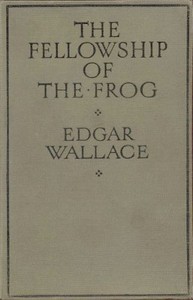
The source record for The Fellowship of the Frog — Context and Discussion measures this digital text at 107,174 words, 7 hr 46 min estimated reading time, and 14 detected text sections.
The text analysis averages about 13.5 words per sentence, while the detected sections provide another way to judge how the source is divided.
Project Gutenberg metadata also associates the work with “Detective and mystery stories,” connecting these edition facts with the source record’s subject description.
Explore this collection
These alternatives are selected using recorded categories and estimated reading time.
About 478 minutes
Historical Psychological Social Fiction
109,739 recorded words. 12 minutes difference from this book's estimate.
View Gutenberg source #71169About 479 minutes
Historical Psychological Social Fiction
109,942 recorded words. 13 minutes difference from this book's estimate.
View Gutenberg source #70023About 445 minutes
Historical Psychological Social Fiction
102,214 recorded words. 21 minutes difference from this book's estimate.
View Gutenberg source #70811Search stored excerpts and compare books → Choose by your preferences →
Choices use stored catalog measurements. Estimates vary with reading speed. A shared category is a catalog label, not a claim that two books have the same argument or literary quality.
Search reads excerpt text stored with this catalog and links to its associated Gutenberg record. The connection is stored in the site database; this tool does not recheck that every excerpt is word-for-word identical to that external record. Excerpt search does not cover every chapter and does not verify historical publication dates.
Catalog snapshot checked: 2026-09-26. Coverage: 100 public books, 100 available source excerpts.
Calculated from edition completeness, EPUB availability, text structure and catalogue metadata. Not a user rating.
Total of 100 points, scaled to a 2.5-5.0 range. Editions with an empty description or a missing EPUB file are not scored.
Public-domain source text
The source text is kept in the dedicated reader, separate from this catalogue record and its commentary.
Edgar Wallace's The Fellowship of the Frog (1926) opens with a foreword that frames the criminal society as a phenomenon of mass psychology: the Frogs were 'almost unnoticed' until a prosperous man became their target, and a Sunday newspaper mocked them as a 'Tramps' Trade Union.' This ironic beginning sets the tone for a detective story that is as much about public perception as about crime. The excerpts reveal a plot driven by Captain Dick Gordon, who claims to know the Frog's identity based on a clue about a 'mysterious child' hidden in an old man's house. The narrative moves through police procedures, a locked bag containing a passport and Annatto (a dairy coloring), and a slow revelation of connections.
The catalog subjects classify this as a detective and mystery story about criminals in England, but the excerpts show a more specific focus: the Frogs are a secret society with a symbol, a ritual, and a public image problem. The foreword notes that 'the average man made casual references' to the society, and a newspaper article gave a 'humorous and quite fanciful extract from its rules and ritual.' This suggests that Wallace is interested in how criminal organizations are perceived and dismissed by the public. The Frog symbol itself is not explained in the excerpts, but it clearly functions as a badge of membership and a source of mystique. The detective work involves not just catching criminals but understanding the society's structure—a theme that aligns with the catalog's 'psychological & social fiction' classification.
A key piece of evidence in the excerpts is a locked brown leather bag retrieved from a King's Cross cloak-room. Its contents are unusual: a suit of clothes, a shaving outfit, a small bottle of Annatto (a coloring used by dairymen), a passport in the name 'John Henry Smith' with the photograph missing, a loaded Browning pistol, and currency. The Annatto is a particularly odd detail—it suggests a connection to dairy or food coloring, but its significance is not explained in the excerpts. The bag's owner is described as 'very ordinary' by the attendant, who does not recall an American. This scene exemplifies Wallace's method of planting specific, tangible clues that may or may not be red herrings. The reader is left to wonder how these items fit together, mirroring the detectives' own uncertainty.
In a meeting with the Chief Commissioner, Captain Dick Gordon declares, 'I know the Frog.' He bases this on learning from Mr. Johnson, Maitland's secretary, that 'somewhere concealed in the old man’s house was a mysterious child.' This claim is met with skepticism—the Board is 'blank-faced'—and even his colleague Elk wonders if it is a bluff. Gordon refuses to reveal the identity, saying he needs 'rope' to secure an arrest and overwhelming evidence. This moment highlights a tension in the narrative: the detective's private certainty versus the need for public proof. The excerpts do not show whether Gordon is correct, but they establish a pattern of gradual revelation and withheld information, typical of Wallace's serialized storytelling.
Readers approaching The Fellowship of the Frog should attend to the interplay between public perception and criminal reality. The excerpts suggest that the novel rewards attention to small details—a bottle of Annatto, a missing photograph, a hidden child—that may seem incidental but are central to the plot. Wallace's style is brisk and dialogue-heavy, with scenes that shift between police procedure and criminal activity. The incomplete excerpts leave the Frog's identity and the society's full scope unknown, making this a work that invites speculation and close reading.
I’ve often thought the Frogs’ strange brotherhood, with its secret signs and whispered vows, shares a quiet kinship with the delicate rituals of girlhood in A girl and her ways — A Closer Reading. Both are worlds of coded glances and unspoken rules, though one hunts for villains while the other simply learns to be seen.
Build a private reading journal entry for this title.