About 349 minutes
Mildred — Story, Setting & Ideas
Historical Psychological Social Fiction
80,195 recorded words. 4 minutes difference from this book's estimate.
View Gutenberg source #70986
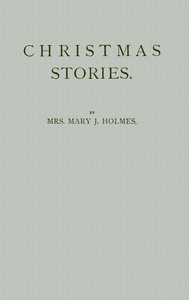
This digital edition of Christmas stories — Context and Discussion is described by source-level measurements including 81,172 words, 5 hr 53 min estimated reading time, and 14 detected text sections.
The text analysis averages about 28.7 words per sentence, while the detected sections provide another way to judge how the source is divided.
Project Gutenberg metadata also associates the work with “American fiction -- 19th century,” connecting these edition facts with the source record’s subject description.
Explore this collection
These alternatives are selected using recorded categories and estimated reading time.
About 349 minutes
Historical Psychological Social Fiction
80,195 recorded words. 4 minutes difference from this book's estimate.
View Gutenberg source #70986About 361 minutes
Historical Psychological Social Fiction
82,942 recorded words. 8 minutes difference from this book's estimate.
View Gutenberg source #73696About 366 minutes
Historical Psychological Social Fiction
84,155 recorded words. 13 minutes difference from this book's estimate.
View Gutenberg source #70185Search stored excerpts and compare books → Choose by your preferences →
Choices use stored catalog measurements. Estimates vary with reading speed. A shared category is a catalog label, not a claim that two books have the same argument or literary quality.
Search reads excerpt text stored with this catalog and links to its associated Gutenberg record. The connection is stored in the site database; this tool does not recheck that every excerpt is word-for-word identical to that external record. Excerpt search does not cover every chapter and does not verify historical publication dates.
Catalog snapshot checked: 2026-09-26. Coverage: 100 public books, 100 available source excerpts.
Calculated from edition completeness, EPUB availability, text structure and catalogue metadata. Not a user rating.
Total of 100 points, scaled to a 2.5-5.0 range. Editions with an empty description or a missing EPUB file are not scored.
Public-domain source text
The source text is kept in the dedicated reader, separate from this catalogue record and its commentary.
Mary J. Holmes's Christmas Stories (1884) collects eight works of fiction and a closing essay on the Passion Play at Oberammergau. Despite the title, the Christmas setting is often a frame rather than the central subject. In the opening story, 'Alice and Adelaide,' the first chapter describes a Christmas Eve party in a richly furnished parlor, but the narrative quickly shifts to a moral contrast between two sisters. The catalog subjects label the book as 'Christmas stories, American' and 'short-stories,' yet the excerpts reveal a broader range: the title story uses Christmas as a backdrop for a sibling-reunion plot, while later pieces like 'The Passion Play at Oberammergau' are non-fiction travel writing. Readers expecting a collection of holiday tales will find instead a mix of sentimental fiction and religious observation.
The excerpts show that Christmas functions more as a convenient emotional trigger than a sustained theme. In 'Ruth and Rena,' the holiday prompts a character to recall a sister lost in a fire eight years earlier, leading to a dramatic recognition scene. The Christmas tree and gifts appear, but the story's core is the reunion of separated siblings. Similarly, 'Alice and Adelaide' opens with a Christmas Eve party, but the plot soon revolves around the sisters' contrasting temperaments. The catalog subject 'Christmas stories, American' may lead readers to expect tales centered on holiday customs or religious meaning; instead, Holmes uses Christmas as a catalyst for melodramatic revelations. The holiday's association with family and memory allows her to deploy her favorite device: the sudden discovery of long-lost relatives.
Across the excerpts, two motifs recur: destructive fires and the recognition of lost family members. In 'Ruth and Rena,' a child's prayer for warmth is answered by a fire that kills her sister—or so she believes. Years later, overhearing a book title triggers a reunion. The fire is described with visceral detail: 'God sent the fire and burned my precious sister up.' In 'Alice and Adelaide,' the opening scene of luxury contrasts with later hardships. These patterns suggest that Holmes uses Christmas as a backdrop for stories about trauma and restoration. The catalog does not list 'fires' or 'sibling separation' as subjects, yet these are the most prominent elements in the excerpts. Readers interested in the catalog's 'psychological' aspect will find that Holmes explores grief and guilt through these recurring events, though always resolved through sentimental recognition.
The table of contents lists eight stories and a final essay, 'The Passion Play at Oberammergau.' This last piece is not fiction but a descriptive account of a religious performance, indicating that the collection is more miscellaneous than the title suggests. The catalog subjects include 'short-stories' and 'Christmas stories, American,' but the excerpts show that only some pieces fit these categories. 'Benny's Christmas' and 'The Christmas Font' likely center on the holiday, while 'Adam Floyd' and 'John Logan' may not. The dedication to Miss Mary W. Jewett, 'almost as much a part of the Christmas festival as the Christmas-tree itself,' hints at the author's personal connection to the holiday, but the contents vary. Readers should approach the book as a sampler of Holmes's sentimental fiction, with Christmas as a recurring but not exclusive element.
Holmes's collection rewards readers who enjoy nineteenth-century domestic fiction with strong emotional arcs. The catalog subjects accurately note the American and Christmas associations, but the excerpts reveal a greater emphasis on sibling bonds and traumatic loss than on holiday cheer. Readers should expect melodramatic coincidences and moral contrasts rather than a unified theme. The presence of the Oberammergau essay suggests Holmes's interest in religious spectacle, which may appeal to those curious about Victorian travel writing.
Those Holmes stories kept circling back to lost siblings and the warmth of reunion, the way firelight draws people together. It reminded me of a quieter sort of puzzle, where the charm isn’t the crime but the company. That’s what I found again in Lord Peter views the body — Reading Notes — that same gentle pleasure in human oddity, wrapped around something darker. Odd, how both linger.
Answer a few questions and save a private reflection on this device.