About 304 minutes
Charles Dickens and other Victorians — Reading Companion
Fantasy Juvenile Worlds
69,905 recorded words. 6 minutes difference from this book's estimate.
View Gutenberg source #72466
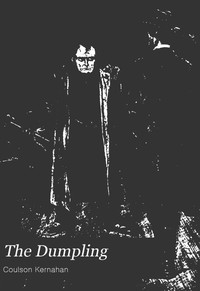
This digital edition of The Dumpling — Edition Insights is described by source-level measurements including 68,426 words, 4 hr 58 min estimated reading time, and 44 detected text sections.
The text analysis averages about 21.6 words per sentence, while the detected sections provide another way to judge how the source is divided.
Project Gutenberg metadata also associates the work with “Detective and mystery stories,” connecting these edition facts with the source record’s subject description.
Explore this collection
These alternatives are selected using recorded categories and estimated reading time.
About 304 minutes
Fantasy Juvenile Worlds
69,905 recorded words. 6 minutes difference from this book's estimate.
View Gutenberg source #72466About 291 minutes
Fantasy Juvenile Worlds
66,781 recorded words. 7 minutes difference from this book's estimate.
View Gutenberg source #69474About 291 minutes
Fantasy Juvenile Worlds
66,823 recorded words. 7 minutes difference from this book's estimate.
View Gutenberg source #75011Search stored excerpts and compare books → Choose by your preferences →
Choices use stored catalog measurements. Estimates vary with reading speed. A shared category is a catalog label, not a claim that two books have the same argument or literary quality.
Search reads excerpt text stored with this catalog and links to its associated Gutenberg record. The connection is stored in the site database; this tool does not recheck that every excerpt is word-for-word identical to that external record. Excerpt search does not cover every chapter and does not verify historical publication dates.
Catalog snapshot checked: 2026-09-26. Coverage: 100 public books, 100 available source excerpts.
Calculated from edition completeness, EPUB availability, text structure and catalogue metadata. Not a user rating.
Total of 100 points, scaled to a 2.5-5.0 range. Editions with an empty description or a missing EPUB file are not scored.
Public-domain source text
The source text is kept in the dedicated reader, separate from this catalogue record and its commentary.
Coulson Kernahan’s The Dumpling opens with an impudent act—a stolen boat—but quickly steers into darker waters. The prologue establishes a narrator who stumbles into an opium den and encounters a figure whose speech blends religious fervour with revolutionary threat. Kernahan’s diction in this scene is notable for its controlled escalation: the madman’s monologue moves from biblical allusion to granite symbolism to a direct, chilling ultimatum. The narrator’s internal commentary—‘The man was mad—mad as it is possible for a man to be; but there was method in his madness’—signals a key authorial choice: the villain’s insanity is not chaotic but calculated, and the prose mirrors this by weaving rational observation with mounting dread.
Kernahan crafts the antagonist’s speech as a hybrid of Old Testament prophecy and socialist grievance. The madman claims a divine sign: a granite fist in a museum, which God declares will be ‘My fist and arm of granite, that thou mayest strike and slay without mercy.’ The phrasing is deliberately archaic—‘Behold, I make of thee’—and the narrator notes that ‘no single word had been dropped which afforded any clue’ to actual crimes. This is a precise authorial choice: the villain’s language is incriminating in tone but legally empty. The narrator’s response is equally deliberate. He refuses to appear eager, saying ‘I’m not going to be bounced or threatened into doing so.’ The line ‘With no one will an appeal to sanity find more favour than with the insane’ reveals a psychological tactic: the narrator feigns reason to manage a madman. Kernahan thus builds tension not through action but through verbal sparring, where every word is a move in a deadly negotiation.
The granite fist appears twice in the excerpts: first in the madman’s vision, then as a symbol of his self-appointed role. Kernahan does not merely report the image; he embeds it in the villain’s theology. The fist is ‘of solid granite, and of such giant proportions, that one single blow from it would make to fall the side of a house.’ The hyperbole is deliberate—it aligns the madman’s ambition with biblical scale. Later, the narrator recalls the threat: ‘his promise to strangle the life, or to tear the heart out of me.’ The repetition of violent, bodily imagery (strangle, tear, heart) reinforces the physical danger beneath the rhetorical surface. This motif is not decorative; it structures the power dynamic. The narrator’s survival depends on reading the madman’s cues, and the fist becomes a shorthand for the unstoppable force the villain believes himself to be. Kernahan uses the image sparingly, letting it resonate through the narrator’s fear.
Kernahan’s dialogue in these excerpts is less about information exchange than about psychological positioning. The madman’s lines are punctuated by stage directions: ‘with a leer,’ ‘his voice was terrible to hear, the blue blaze in his eyes terrible to see.’ The narrator’s replies are measured, almost clinical: ‘You can’t frighten me with your threats.’ The author avoids melodramatic exclamation; instead, the narrator’s calmness is a weapon. When the madman says ‘Which is it to be?’ the narrator does not answer directly but pivots to conditions: ‘before I say definitely I’m with you—as is my wish—there are one or two more questions I must ask.’ This verbal sidestep is characteristic of Kernahan’s method: the narrator maintains control by refusing to be rushed. The dialogue thus serves a dual purpose: it advances the plot while revealing character through linguistic restraint. The madman’s fluency contrasts with the narrator’s deliberate pauses, creating a rhythm of threat and parry.
The excerpts provide only a glimpse of the opium den setting, but Kernahan’s descriptive choices are evident. The frontispiece illustration (not reproduced here) is titled ‘In the Opium Den,’ and the chapter heading promises a space of moral and physical decay. The narrator’s initial transgression—taking the boat—is described as ‘impudent,’ a word that suggests both daring and foolishness. This sets a tone of reckless curiosity that leads him into danger. The den itself is not described in the provided text, but its function is clear: it is a liminal space where social rules dissolve, and where the madman can speak freely. Kernahan uses the setting to justify the improbable encounter; the narrator’s presence there is itself a breach of propriety, making him vulnerable to the madman’s rhetoric. The atmosphere is one of concealed threat, where ‘cunning and cruel eyes’ peer from under a ‘cape of Christ-like compassion.’ The contrast between religious imagery and criminal intent is Kernahan’s primary tool for creating unease.
Readers approaching The Dumpling should attend to Kernahan’s handling of voice: the narrator’s self-awareness and the madman’s rhetorical control are the engine of the early chapters. The novel’s subtitle promises a ‘detective love story of a great labour rising,’ but the excerpts suggest that the detective work is as much about parsing language as about solving crimes. The granite fist and the madman’s biblical cadences are not mere decoration; they are clues to a worldview that the narrator must navigate. Kernahan’s prose rewards attention to what is not said—the pauses, the evasions, the calculated silences.
Reading the editorial note on The Dumpling, I kept thinking of that old labour unrest and its clenched fury, and somehow my mind wandered to the companion volume on Dickens and his era. There’s a shared patience in how both handle the ragged edges of Victorian anger, the way madness creeps into reasoned prose. It felt like finding a familiar lamp in a dark room — Charles Dickens and other Victorians — Reading Companion holds that same quiet, unflinching stare.
Build a private reading journal entry for this title.