About 156 minutes
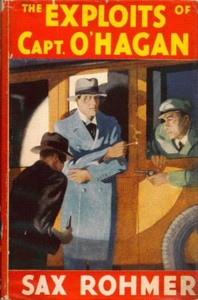
The exploits of Captain O'Hagan — Background and Themes
Fantasy Juvenile Worlds
35,803 recorded words. 14 minutes difference from this book's estimate.
View Gutenberg source #69544
Less than kin — A Reader’s Guide can be approached with a clearer sense of reading commitment from its source measurements: 38,940 words, 2 hr 50 min estimated reading time, and 15 detected text sections.
The text analysis averages about 14.2 words per sentence, while the detected sections provide another way to judge how the source is divided.
Project Gutenberg metadata also associates the work with “Impostors and imposture -- Fiction,” connecting these edition facts with the source record’s subject description.
Explore this collection
These alternatives are selected using recorded categories and estimated reading time.
About 156 minutes
Fantasy Juvenile Worlds
35,803 recorded words. 14 minutes difference from this book's estimate.
View Gutenberg source #69544About 150 minutes
Fantasy Juvenile Worlds
34,345 recorded words. 20 minutes difference from this book's estimate.
View Gutenberg source #70690About 193 minutes
Fantasy Juvenile Worlds
44,244 recorded words. 23 minutes difference from this book's estimate.
View Gutenberg source #72300Search stored excerpts and compare books → Choose by your preferences →
Choices use stored catalog measurements. Estimates vary with reading speed. A shared category is a catalog label, not a claim that two books have the same argument or literary quality.
Search reads excerpt text stored with this catalog and links to its associated Gutenberg record. The connection is stored in the site database; this tool does not recheck that every excerpt is word-for-word identical to that external record. Excerpt search does not cover every chapter and does not verify historical publication dates.
Catalog snapshot checked: 2026-09-26. Coverage: 100 public books, 100 available source excerpts.
Calculated from edition completeness, EPUB availability, text structure and catalogue metadata. Not a user rating.
Total of 100 points, scaled to a 2.5-5.0 range. Editions with an empty description or a missing EPUB file are not scored.
Public-domain source text
The source text is kept in the dedicated reader, separate from this catalogue record and its commentary.
The novel opens not with its heroine but with two women in orchestra seats, their opera glasses trained on the boxes above. Mrs. Raikes and Miss Lewis dissect the social landscape with the same precision they apply to the performance: who sits where, who owes whom, and whether a penniless orphan can be truly good to a rich uncle. The catalog subjects list impostors and man-woman relationships, but the excerpts show something more specific: a world where every gesture is read as a signal, and where the line between genuine feeling and calculated display is constantly tested.
The opening chapter establishes a setting that is both literal and metaphorical. The opera house is not a place of art but a stage for social judgment. Mrs. Raikes and Miss Lewis scan the tiers like astronomers, cataloging who appears in which box and what that implies about their finances or alliances. When Miss Lewis spots James Emmons in the Lees' box, the conversation turns to Nellie Lee's motives: is she kind to her uncle out of duty or calculation? The dialogue reveals a community where every action is weighed for its strategic value. Miller's prose mirrors this scrutiny: she describes the lady in gray as "balanced like a flower on its stalk," a phrase that suggests both poise and precariousness. The opera setting is not incidental; it frames the novel's central tension between public performance and private truth.
Later in the excerpts, a barn fire becomes the stage for a different kind of performance. Nellie, having slipped away from her betrothed James Emmons, witnesses her cousin Bob Lee run into a burning building to rescue a puppy. The crowd's reactions form a chorus of masculine admiration expressed through unlikely phrases: "the young fool" or "the darndest." More pointedly, a debate between Overton and a clergyman crystallizes the novel's ethical core. Overton says, "courage is a kind of morality," while the clergyman counters that "it takes some courage to be merely good." Nellie absorbs this exchange, contrasting Bob's reckless bravery with James Emmons's steady industry. The fire scene does not resolve which morality wins; it presents a choice between two kinds of courage, leaving Nellie—and the reader—to weigh them.
The catalog subject "Impostors and imposture" finds its echo not in a literal con artist but in the subtle performances of social life. Mrs. Raikes and Miss Lewis have "the reputation of being musical," a reputation built on their choice of orchestra seats rather than any demonstrated knowledge. Nellie herself is described as looking "as cold as a little stone," a surface that may or may not reflect her inner state. The fire scene adds another layer: Emmons's comment that Bob Lee risked his life "against a blind puppy" reveals a calculating nature that Nellie finds contemptible. Yet the novel does not simply oppose sincerity to hypocrisy. It shows characters performing for different audiences—the opera crowd, the fire's onlookers, themselves. The excerpts suggest that imposture is not a deviation from social norms but the very medium in which these characters operate.
Readers approaching Less than kin should attend to the spaces between what characters say and what they do. Miller's dialogue is dense with implication; a single line about a missing tooth in the opera tiers can signal financial strain or social decline. The excerpts offer no resolution to Nellie's dilemma, only a vivid snapshot of the forces pulling her. The novel rewards close attention to gesture, setting, and the weight of a well-placed phrase.
I keep thinking about Nellie Lee’s quiet reckoning, how a single barn fire could peel back every layer of polite performance. It reminded me of something older, gentler in tone — the way Charles Dickens and other Victorians — Reading Companion lingers on private moral weather beneath public scenery. Both feel less like stories and more like slow recognitions of who we become when nobody’s watching.
Answer a few questions and save a private reflection on this device.