About 567 minutes
The curse of gold — Edition Insights
Historical Psychological Social Fiction
130,299 recorded words. 23 minutes difference from this book's estimate.
View Gutenberg source #70134
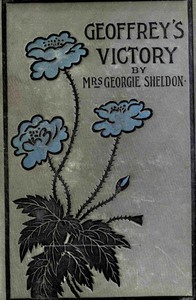
The source record for Geoffrey's victory; — Key Ideas to Explore measures this digital text at 135,603 words, 9 hr 50 min estimated reading time, and 50 detected text sections.
The text analysis averages about 21.1 words per sentence, while the detected sections provide another way to judge how the source is divided.
Project Gutenberg metadata also associates the work with “Dime novels,” connecting these edition facts with the source record’s subject description.
Explore this collection
These alternatives are selected using recorded categories and estimated reading time.
About 567 minutes
Historical Psychological Social Fiction
130,299 recorded words. 23 minutes difference from this book's estimate.
View Gutenberg source #70134About 566 minutes
Historical Psychological Social Fiction
130,009 recorded words. 24 minutes difference from this book's estimate.
View Gutenberg source #74930About 661 minutes
Historical Psychological Social Fiction
151,815 recorded words. 71 minutes difference from this book's estimate.
View Gutenberg source #69809Search stored excerpts and compare books → Choose by your preferences →
Choices use stored catalog measurements. Estimates vary with reading speed. A shared category is a catalog label, not a claim that two books have the same argument or literary quality.
Search reads excerpt text stored with this catalog and links to its associated Gutenberg record. The connection is stored in the site database; this tool does not recheck that every excerpt is word-for-word identical to that external record. Excerpt search does not cover every chapter and does not verify historical publication dates.
Catalog snapshot checked: 2026-09-26. Coverage: 100 public books, 100 available source excerpts.
Calculated from edition completeness, EPUB availability, text structure and catalogue metadata. Not a user rating.
Total of 100 points, scaled to a 2.5-5.0 range. Editions with an empty description or a missing EPUB file are not scored.
Public-domain source text
The source text is kept in the dedicated reader, separate from this catalogue record and its commentary.
The excerpts from Geoffrey's Victory; or, The Double Deception open with a winter night scene described in ornate, personified language—"the sky was brilliant with millions of beautiful stars that glowed and scintillated as if conscious." This heightened, emotional register quickly gives way to a confessional dialogue between the protagonist, Geoffrey, and a man named Jack, who reveals a past crime. The narrative voice shifts between third-person omniscient and direct, colloquial speech, with Jack's dialect marked by contractions like "eatin'" and "ag'in." The catalog subjects list "Boston (Mass.) — Social life and customs — 19th century" and "Romance fiction," but the excerpts focus less on Boston society and more on a rural, guilt-ridden encounter. The romance element is not yet evident in these passages; instead, the text dwells on moral accountability and the weight of past sins.
The longest excerpt is a sustained confession from Jack, a man who once harmed Geoffrey as a child. His speech is rendered in a thick dialect: "I’ve been on that sheep ranch ever since," "’twould comfort my poor old heart more’n I could tell ye." This vernacular contrasts sharply with Geoffrey's more formal responses, such as "I freely forgive you for your share in my misfortune." The dialogue carries the emotional weight of the passage, with Jack sobbing "like a child" and Geoffrey's eyes filling with tears. The narrative explicitly moralizes: Geoffrey reflects that Jack was "naturally honorable and kind-hearted" and that his crime stemmed from "misfortunes that led him into evil company and to the use of intoxicating drinks." This pattern—a character recounting a troubled past, followed by a forgiving listener—suggests a structural reliance on retrospective storytelling. The excerpts do not show Boston society or romantic plotlines, but instead a rural setting near a clump of spruce where Jack once plighted his troth.
The table of contents hints at the novel's full arc, which the excerpts only partially reveal. Chapter titles like "A Monstrous Proposition," "The Hazer Hazed," and "A Startling Recognition" suggest college pranks, mistaken identities, and revelations. The subtitle "The Double Deception" implies a layered plot of concealment. Later chapters—"A Remarkable Discovery," "Geoffrey Learns the Truth at Last," "Mrs. Mapleson's Confession"—point to a mystery involving parentage and inheritance. Jack's confession in the excerpts touches on Geoffrey's father: "The best description ye could get of him’d be to go and look at yerself in the glass." This indicates a physical resemblance that will likely drive plot revelations. The catalog subject "Romance fiction" is not borne out in the provided text, but chapter titles such as "A Declaration" and "The Wedding" confirm its eventual presence. The excerpts thus offer a narrow window into a larger, intricate narrative.
The excerpts are set in a natural, rural location—"by that clump of spruce"—where Jack hid before encountering Geoffrey. This contrasts with the catalog subject of Boston social life and customs. The only urban reference is a mention of New York, where Geoffrey was lost as a child. The moral framework is explicit: Jack repeatedly condemns himself for murder, though Geoffrey argues it was accidental. The narrative endorses forgiveness: "I freely forgive you for your share in my misfortune." The language of Providence appears: "it might be called the work of Providence that I lost ye." This religious undertone aligns with the dime novel tradition of melodramatic morality. The excerpts do not depict the broader Boston setting or romantic entanglements, focusing instead on a single, emotionally charged conversation. Readers should expect the full novel to balance such intimate confessions with the social and romantic plots suggested by the chapter list.
These excerpts reveal a novel that relies on retrospective confessions and moral resolution, with a protagonist who embodies forgiveness. The catalog subjects may overemphasize Boston social customs, as the provided text is set in a rural, confessional space. Readers approaching the full work should anticipate a structure where past secrets are gradually unveiled through dialogue, and where the titular "victory" likely involves both personal redemption and the unraveling of the double deception.
Reading about Geoffrey’s quiet forgiveness brought me back to a rainy afternoon when I first met Clifton’s tangled legacy, and I felt that same ache—how someone else’s secret can shape our gentleness without our knowing it. The curse of Clifton — Story, Setting & Ideas stirred that identical hush in me, a soft recognition that mercy often grows from the fractures we’re least proud of.
A brief reflection can help important ideas stay with you longer.