About 200 minutes
Bambi — Themes and Context
Fantasy Juvenile Worlds
45,871 recorded words. 1 minutes difference from this book's estimate.
View Gutenberg source #72577
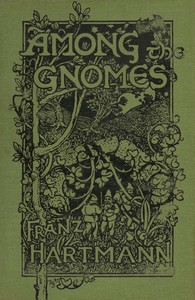
Before opening Among the gnomes — Reading Notes, the edition data offers a quick orientation: 45,743 words, 3 hr 19 min estimated reading time, and 15 detected text sections.
The text analysis averages about 24.0 words per sentence, while the detected sections provide another way to judge how the source is divided.
Project Gutenberg metadata also associates the work with “Fantasy fiction,” connecting these edition facts with the source record’s subject description.
Explore this collection
These alternatives are selected using recorded categories and estimated reading time.
About 200 minutes
Fantasy Juvenile Worlds
45,871 recorded words. 1 minutes difference from this book's estimate.
View Gutenberg source #72577About 193 minutes
Fantasy Juvenile Worlds
44,244 recorded words. 6 minutes difference from this book's estimate.
View Gutenberg source #72300About 170 minutes
Fantasy Juvenile Worlds
38,940 recorded words. 29 minutes difference from this book's estimate.
View Gutenberg source #71674Search stored excerpts and compare books → Choose by your preferences →
Choices use stored catalog measurements. Estimates vary with reading speed. A shared category is a catalog label, not a claim that two books have the same argument or literary quality.
Search reads excerpt text stored with this catalog and links to its associated Gutenberg record. The connection is stored in the site database; this tool does not recheck that every excerpt is word-for-word identical to that external record. Excerpt search does not cover every chapter and does not verify historical publication dates.
Catalog snapshot checked: 2026-09-26. Coverage: 100 public books, 100 available source excerpts.
Calculated from edition completeness, EPUB availability, text structure and catalogue metadata. Not a user rating.
Total of 100 points, scaled to a 2.5-5.0 range. Editions with an empty description or a missing EPUB file are not scored.
Public-domain source text
The source text is kept in the dedicated reader, separate from this catalogue record and its commentary.
Franz Hartmann's Among the Gnomes (1895) presents itself as an occult tale of adventure in the Untersberg, a mountain known in folklore for its elemental spirits. The opening chapter, “The Haunted Castle,” immediately establishes a tone of serious investigation into the “night-side of Nature,” invoking Paracelsus and describing the mountain's geography in precise, almost geological detail. The narrator warns that inexperienced wanderers may be misled by gnomes if their intentions are not pure, setting up a moral framework for the encounters to come.
The catalog subjects classify this work as fantasy fiction and a translation of German fiction, but the excerpts reveal a stronger emphasis on occult philosophy and didactic dialogue than on conventional fantasy adventure. The narrative voice is that of a learned doctor, more concerned with explaining the nature of elemental beings than with plotting action.
The Untersberg is not merely a setting but a character in its own right, described with the precision of a travelogue. Hartmann details its “perpendicular walls, formed of marble rocks thousands of feet high,” its “deep ravines and chasms,” and the “mysterious caves” that seem to penetrate into the mountain's bowels. This geographical specificity grounds the occult in a real, locatable place—the Austrian Alps near Salzburg. The narrator insists that the mountain appears as a chain of separate links, each with its own aspect, and that the inexperienced may lose their way if misled by gnomes. This blending of topographic fact with supernatural warning is a recurring technique, lending credibility to the fantastic elements.
The princess Adalga is presented as a being of natural sincerity, lacking the “sweet little lies” of modern civilization. The narrator admires her purity but regrets her inability to hide her true sentiments. Their dialogue reveals a central tension: Adalga wishes to become human to achieve immortality, but the narrator insists she must first learn logic, syntax, and the art of doubting everything. This exchange, drawn from the excerpts, positions the book as a critique of contemporary society, where “real human beings” have been replaced by “ghosts and hobgoblins.” The princess's desire for unification with the narrator to become “one immortal being” echoes occult themes of spiritual alchemy, yet the narrator's response—offering to teach her human knowledge—suggests a pedagogical rather than mystical resolution.
The narrator identifies himself as a doctor and author of works on magic and Paracelsus, and his tone oscillates between empirical observation and esoteric speculation. He describes the gnomes as “elemental spirits of Nature,” some good and some evil, and recounts his stay at the palace of the queen, where he spends time with Adalga. His answers to her questions about humanity are notably ironic: he assures her that millions of people do not know they are immortal, and that clergymen are employed to make them believe it. This dry humor, combined with his willingness to instruct the princess in logic and induction, suggests a narrator who is both a participant in and a critic of the occult world he describes. The excerpts do not reveal the outcome of his civilizing mission, leaving the reader to wonder whether his rational methods succeed or fail.
Readers approaching Among the Gnomes should expect a work that prioritizes philosophical dialogue over plot. The excerpts offer no clear narrative arc, only a series of encounters and conversations. Pay attention to the narrator's shifting stance—sometimes a guide, sometimes a skeptic—and to the way Hartmann uses the mountain's geography to blur the line between natural and supernatural. The book rewards those interested in theosophical ideas and late Victorian occultism, but may frustrate readers seeking a straightforward fantasy adventure.
Rain kept the afternoon indoors, and I lingered over Among the Gnomes, caught in Adalga's longing for mortality—how strange, to want what we forget to miss. That wistfulness followed me to the shelf, where an unassuming volume waited. The Dumpling — Edition Insights offered a softer, homelier echo of that same ache, and I read it before the kettle cooled.
Your answers remain private and are stored only in this browser.