About 360 minutes
The education of Uncle Paul — Edition Insights
Fantasy Juvenile Worlds
82,602 recorded words. 14 minutes difference from this book's estimate.
View Gutenberg source #69668
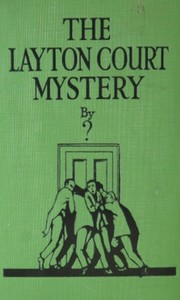
For The Layton Court mystery — A Reader’s Guide, the stored edition analysis reports 79,399 words, 5 hr 46 min estimated reading time, and 32 detected text sections.
The text analysis averages about 12.2 words per sentence, while the detected sections provide another way to judge how the source is divided.
Project Gutenberg metadata also associates the work with “Detective and mystery stories,” connecting these edition facts with the source record’s subject description.
Explore this collection
These alternatives are selected using recorded categories and estimated reading time.
About 360 minutes
Fantasy Juvenile Worlds
82,602 recorded words. 14 minutes difference from this book's estimate.
View Gutenberg source #69668About 308 minutes
Fantasy Juvenile Worlds
70,780 recorded words. 38 minutes difference from this book's estimate.
View Gutenberg source #70174About 304 minutes
Fantasy Juvenile Worlds
69,905 recorded words. 42 minutes difference from this book's estimate.
View Gutenberg source #72466Search stored excerpts and compare books → Choose by your preferences →
Choices use stored catalog measurements. Estimates vary with reading speed. A shared category is a catalog label, not a claim that two books have the same argument or literary quality.
Search reads excerpt text stored with this catalog and links to its associated Gutenberg record. The connection is stored in the site database; this tool does not recheck that every excerpt is word-for-word identical to that external record. Excerpt search does not cover every chapter and does not verify historical publication dates.
Catalog snapshot checked: 2026-09-26. Coverage: 100 public books, 100 available source excerpts.
Calculated from edition completeness, EPUB availability, text structure and catalogue metadata. Not a user rating.
Total of 100 points, scaled to a 2.5-5.0 range. Editions with an empty description or a missing EPUB file are not scored.
Public-domain source text
The source text is kept in the dedicated reader, separate from this catalogue record and its commentary.
Anthony Berkeley's The Layton Court Mystery opens with a gardener named William, a man of 'melancholy deliberation' who studies greenfly removal 'from every possible point of view, particularly the worst.' This small, comic detail sets the tone for a detective story that values character and atmosphere as much as puzzle. The author's preface, addressed to his father, explicitly states his aim: to create a detective who behaves 'as nearly as possible as he might be expected to do in real life'—fallible, talkative, and prone to errors. Berkeley also promises to lay out 'every scrap of evidence just as it is discovered,' inviting the reader to solve alongside the sleuth. The result is a novel that balances a traditional country-house mystery with a self-aware, almost playful approach to the genre's conventions.
Roger Sheringham, Berkeley's amateur detective, is no hawk-eyed genius. The preface warns that he 'does make a mistake or two occasionally,' and the narrative delivers on this promise. In one scene, Sheringham reflects on a suspect's behavior, noting that showing his hand too soon was 'a silly thing to do'—a comment that could apply to Sheringham himself. His methods are conversational and improvisational; he gathers information through casual banter, as when he questions a landlord about 'walking gentlemen' while nursing a tankard of beer. This approach makes him more relatable than the typical sleuth, but also less infallible. Berkeley's choice to foreground Sheringham's humanity—his thirst, his humor, his missteps—distinguishes the novel from more rigid puzzle stories of the era.
Berkeley uses dialogue to reveal personality and advance the investigation. The landlord's chatter, for instance, is peppered with local color and self-interest: he praises his bar, laments the lack of strangers, and shares news of the 'goings on' at Layton Court with a mix of relish and complaint. Sheringham's responses are carefully calibrated—he 'hurriedly subdued the involuntary smile' at the chauffeur's personal view of the tragedy, then steers the conversation toward business. The exchange is both natural and strategic, showing how Sheringham mines casual talk for clues. Similarly, the clipped exchanges between Sheringham and his companion Alec convey urgency and camaraderie: 'Time's precious, and I want to ruminate a little.' These dialogues feel lived-in, avoiding the stilted exposition common in lesser mysteries.
Berkeley grounds his mystery in vivid, sensory descriptions that evoke the English countryside. The bar of the village inn is 'cool,' with 'sanded floor and brasses gleaming in the soft twilight'—a welcome contrast to the 'blazing sun and the dust' outside. Such details do more than set a scene; they create a tangible world that the investigation inhabits. The opening chapter's focus on William the gardener, with his unhurried approach to life, establishes a rhythm of deliberation that the mystery will later subvert. Even the weather is used to heighten mood: the heat makes Sheringham's thirst 'heartfelt,' and the 'winding white road' to the village feels both inviting and ominous. These touches prevent the story from becoming a mere puzzle, anchoring it in a specific time and place.
Berkeley's preface lays out a clear contract with the reader: all evidence will be presented 'plainly' and 'just as it is discovered,' so that the reader has 'precisely the same data' as the detective. This promise shapes the narrative structure. Chapters are titled with clues—'The Vase That Wasn't,' 'Mr. Sheringham Investigates a Footprint'—signaling that each piece of information is a potential key. Yet Berkeley also subverts expectations: the chapter 'Mr. Sheringham Solves the Mystery' is followed by 'The Mystery Finally Refuses to Accept Mr. Sheringham's Solution,' suggesting that the first solution is wrong. This self-conscious play with the genre's conventions keeps the reader engaged, as the puzzle is not merely solved but re-solved. The final chapter, 'What Really Did Happen,' implies that truth emerges only after multiple attempts.
Readers approaching The Layton Court Mystery should attend to the interplay between Sheringham's confident theorizing and the evidence that contradicts him. Berkeley's commitment to fair play means that every clue is present, but not always where one expects it. The novel rewards careful attention to dialogue and setting, where motives and misdirections hide in plain sight. This is a mystery that respects its audience's intelligence while never taking itself too seriously.
There’s something tender about a detective who stumbles, and Roger Sheringham’s honest fumbling stayed with me long after the puzzle clicked shut. It reminded me of how certain Victorians, too, let their characters wander into error before grace. That quiet thread—fallibility becoming warmth—runs through Charles Dickens and other Victorians — Reading Companion. I keep thinking about both books the way one replays a gentle conversation.
Save your reaction, strongest insight, and memorable passage.