About 429 minutes
Lord Peter views the body — Reading Notes
Historical Psychological Social Fiction
98,536 recorded words. 7 minutes difference from this book's estimate.
View Gutenberg source #73295
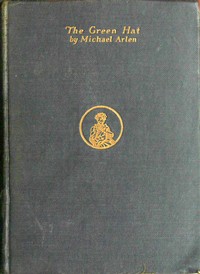
Before opening The green hat — Inside the Classic, the edition data offers a quick orientation: 96,876 words, 7 hr 2 min estimated reading time, and 9 detected text sections.
The text analysis averages about 14.9 words per sentence, while the detected sections provide another way to judge how the source is divided.
Project Gutenberg metadata also associates the work with “Love stories,” connecting these edition facts with the source record’s subject description.
Explore this collection
These alternatives are selected using recorded categories and estimated reading time.
About 429 minutes
Historical Psychological Social Fiction
98,536 recorded words. 7 minutes difference from this book's estimate.
View Gutenberg source #73295About 433 minutes
Historical Psychological Social Fiction
99,387 recorded words. 11 minutes difference from this book's estimate.
View Gutenberg source #72651About 404 minutes
Historical Psychological Social Fiction
92,704 recorded words. 18 minutes difference from this book's estimate.
View Gutenberg source #72076Search stored excerpts and compare books → Choose by your preferences →
Choices use stored catalog measurements. Estimates vary with reading speed. A shared category is a catalog label, not a claim that two books have the same argument or literary quality.
Search reads excerpt text stored with this catalog and links to its associated Gutenberg record. The connection is stored in the site database; this tool does not recheck that every excerpt is word-for-word identical to that external record. Excerpt search does not cover every chapter and does not verify historical publication dates.
Catalog snapshot checked: 2026-09-26. Coverage: 100 public books, 100 available source excerpts.
Calculated from edition completeness, EPUB availability, text structure and catalogue metadata. Not a user rating.
Total of 100 points, scaled to a 2.5-5.0 range. Editions with an empty description or a missing EPUB file are not scored.
Public-domain source text
The source text is kept in the dedicated reader, separate from this catalogue record and its commentary.
The narrator of The Green Hat opens by declaring that the title object was “the first thing about her that he saw” and, in a way, “the last.” This framing device immediately establishes the hat as a token of memory and loss, while the narrator’s self-deprecating tone—calling his history “unimportant”—signals a voice that is both intimate and ironic. The early pages dwell on the lane where he lived, a place of “improbable things”: arrests, fights, a flower-girl courted by a nobleman. This digressive, almost picaresque setting contrasts sharply with the later, tauter scenes of illness and crisis, suggesting a deliberate modulation of pace as the narrative moves from social comedy to psychological tension.
The narrator’s voice is the novel’s most distinctive feature. In the opening chapter, he adopts a confiding, almost gossipy register: “I have seen two butlers fighting in our lane. I have seen a very old nobleman woo a flower-girl.” The rhythm is breathless, piling up vignettes with a wry detachment. Yet when the scene shifts to the sickroom of Iris, the tone contracts. The same narrator who catalogued street life now reports a doctor’s clipped medical jargon—“Lysis, not crisis”—and the raw physicality of “pain, pain, pain.” This abrupt compression of style mirrors the narrowing of focus from a bustling lane to a single bed. The narrator’s earlier loquacity becomes a foil for the stark, halting dialogue of the later excerpt, where words like “nice” and “fivers” carry a bitter weight.
The novel’s pace is not uniform. The opening paragraphs amble through anecdote and description, as if the narrator is reluctant to arrive at his subject. He delays introducing the woman in the green hat, instead offering a guided tour of Shepherd’s Market. This leisurely tempo creates a sense of ordinary life against which the later urgency will be measured. In the sickroom scene, the pace quickens through fragmentation: short questions, muttered replies, and the doctor’s fumbling with a pocket-book. The slip of paper with two names is described as “a faint cry of loneliness,” and the narrator’s wish to keep it—“I would like to have it now, beside that fiver”—introduces a retrospective ache. The shift from expansive to compressed pacing is not merely stylistic; it enacts the narrator’s growing emotional involvement.
Two details recur across the excerpts: the green hat and the act of writing. The hat is both a literal object and a symbolic frame, mentioned at the start and echoed in the title. The narrator’s profession as a writer is foregrounded early—“the writer,” “the Author”—and later he is given a slip of paper with names scrawled in pencil. This slip, like the hat, becomes a talisman of connection. The doctor’s note is “grubby,” ordinary, yet it carries Iris’s voice: “just be nice to them, please.” The narrator’s desire to keep it alongside a five-pound note suggests that small, handwritten artifacts hold more emotional truth than grand gestures. These recurring motifs—hat, paper, writing—anchor the narrative’s shifts in voice and pace, reminding the reader that this is a story told, and retold, from a particular vantage.
Readers attentive to narrative craft will find in The Green Hat a study in controlled modulation: the same voice that sketches a lane’s lowlife can later render a sickroom’s stillness with equal precision. The hat itself, never fully explained, remains a cipher—a bright spot in a world of “fivers” and “septic poisoning.” Approach the novel not as a romance but as a portrait of a narrator struggling to hold together a story that keeps slipping into fragments. The gaps between the lane and the sickbed are where the real drama lies.
I kept thinking about that green hat long after finishing—how a single object can hold so much unspoken ache. It reminded me of a quieter book I found later, one that traces similar shadows through its own careful context. There’s a tenderness in watching characters fail each other gently. Watch and ward — Text and Context lingers the same way, like a room you’re not ready to leave yet.
Build a private reading journal entry for this title.