About 429 minutes
Lord Peter views the body — Reading Notes
Historical Psychological Social Fiction
98,536 recorded words. 4 minutes difference from this book's estimate.
View Gutenberg source #73295
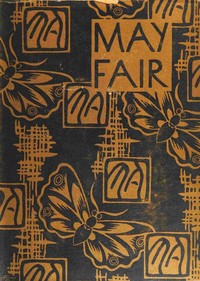
The catalog record for May Fair — Background and Themes provides practical reading context through 99,387 words, 7 hr 13 min estimated reading time, and 10 detected text sections.
The text analysis averages about 15.2 words per sentence, while the detected sections provide another way to judge how the source is divided.
Project Gutenberg metadata also associates the work with “London (England) -- Fiction,” connecting these edition facts with the source record’s subject description.
Explore this collection
These alternatives are selected using recorded categories and estimated reading time.
About 429 minutes
Historical Psychological Social Fiction
98,536 recorded words. 4 minutes difference from this book's estimate.
View Gutenberg source #73295About 422 minutes
Historical Psychological Social Fiction
96,876 recorded words. 11 minutes difference from this book's estimate.
View Gutenberg source #71913About 445 minutes
Historical Psychological Social Fiction
102,214 recorded words. 12 minutes difference from this book's estimate.
View Gutenberg source #70811Search stored excerpts and compare books → Choose by your preferences →
Choices use stored catalog measurements. Estimates vary with reading speed. A shared category is a catalog label, not a claim that two books have the same argument or literary quality.
Search reads excerpt text stored with this catalog and links to its associated Gutenberg record. The connection is stored in the site database; this tool does not recheck that every excerpt is word-for-word identical to that external record. Excerpt search does not cover every chapter and does not verify historical publication dates.
Catalog snapshot checked: 2026-09-26. Coverage: 100 public books, 100 available source excerpts.
Calculated from edition completeness, EPUB availability, text structure and catalogue metadata. Not a user rating.
Total of 100 points, scaled to a 2.5-5.0 range. Editions with an empty description or a missing EPUB file are not scored.
Public-domain source text
The source text is kept in the dedicated reader, separate from this catalogue record and its commentary.
Michael Arlen’s May Fair presents itself as an “entertainment” for gentlefolk, a series of episodes set in London during the fifteenth and sixteenth years of George V’s reign. The work’s structure is immediately striking: a prologue introduces a young gentleman walking with determined aimlessness, and the subsequent chapters bear titles like “The Ace of Cads” and “The Battle of Berkeley Square,” suggesting self-contained stories. Yet the excerpts reveal a web of recurring images—sleep, twilight, telegrams, and sudden departures—that knit the episodes together. The narrative moves fluidly between Mayfair drawing-rooms, Parisian hotels, and the streets of St. James’s, with characters often caught between stillness and abrupt motion.
The prologue establishes a narrator who observes a young gentleman’s walk, a device that frames the ensuing tales. The subtitle promises to “reveal to gentlefolk the real state of affairs” in London’s heart, but the excerpts show that revelation comes through indirection: a duke’s declaration of love is met with a sleeping woman, and a telegram arrives at a pivotal moment. Each chapter appears to be a discrete story, yet the prologue’s tone—mock-heroic, slightly arch—suggests a unifying authorial voice. The table of contents lists eleven episodes, including “The Ghoul of Golders Green” and “Where the Pigeons Go to Die,” hinting at a range from romantic comedy to macabre intrigue. Without reading the full book, one can observe that the structure invites readers to treat each episode as a facet of a larger social portrait.
Across the excerpts, sleep and twilight recur as thresholds of vulnerability and revelation. The duke’s beloved, Ava, is asleep during his most passionate speech; her maid later says, “It is when she is happy that she sleeps.” The scene unfolds in deepening dusk, where “night had extinguished all but the last tapers of twilight.” This motif of suspended consciousness appears again when the duke receives a telegram that transforms his mood from rage to peace. The narrative often withholds direct access to characters’ inner states, using physical stillness—a closed eye, a parted mouth—to signal emotional depths. The maid’s remark, “It is more comfortable to be loved than to love,” underscores a pattern of unrequited or misdirected feeling that the episodes likely explore.
The excerpts trace characters through sharply contrasting settings: a dark room in a Paris hotel, the Place Vendôme, a club in St. James’s Street, and the streets of Mayfair. The duke’s trajectory in the prologue’s aftermath—from a walk in London to a Parisian hotel room, then back to London by train—illustrates how the narrative uses travel and urban geography to mark emotional shifts. The telegram from the hall-porter of his club bridges the private anguish of the love scene with the public world of gentlemen’s clubs and social obligations. Arlen’s London is a network of known addresses—Berkeley Square, Golders Green—where characters move with a sense of entitlement but also of confinement. The repeated phrase “these charming people” suggests a satirical distance, as if the narrator is both insider and observer.
The prose in the excerpts oscillates between ornate declarations and clipped, almost stage-direction-like sentences. The duke’s speech—“I have been proud, pitiless, impious. I am soiled”—is balanced by the maid’s colloquial “I’ll be dismissed!” and the narrator’s dry asides. The subtitle’s mock-legal phrasing (“purporting to reveal… together with suitable reflections”) sets a tone of ironic formality that the episodes may undercut with sudden bursts of melodrama or farce. The chapter titles, such as “The Revolting Doom of a Gentleman Who Would Not Dance with His Wife,” promise a blend of moral judgment and wit. This stylistic range—from the baroque to the breezy—suggests that Arlen is playing with the conventions of both society comedy and romantic tragedy, without fully committing to either.
Readers approaching May Fair should attend to the way its episodes echo one another through repeated gestures—a telegram, a sleepless night, a sudden journey. The work rewards attention to its framing devices and to the spaces where characters pause, whether in a dark room or on a Parisian square. The excerpts offer only fragments, but they suggest a cohesive design beneath the glittering surface of Mayfair life.
I keep thinking about how May Fair drifts between the intimate and the public, those half-awake moments between parties. It reminds me of the quieter atmosphere in The house of the wizard — Edition Insights, where the ordinary and strange blur together like a room you’re not sure you left. Some old books hold that hinge between worlds, and I’m still turning on it.
Your answers remain private and are stored only in this browser.