About 50 minutes
The air splasher — Key Ideas to Explore
Fantasy Juvenile Worlds
11,500 recorded words. 11 minutes difference from this book's estimate.
View Gutenberg source #75112
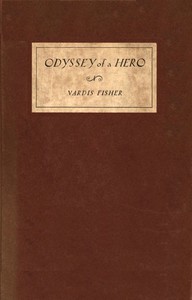
The catalog record for Odyssey of a hero — Text and Context provides practical reading context through 8,855 words, 39 min estimated reading time, and 2 detected text sections.
The text analysis averages about 17.3 words per sentence, while the detected sections provide another way to judge how the source is divided.
Project Gutenberg metadata also associates the work with “Short stories,” connecting these edition facts with the source record’s subject description.
Explore this collection
These alternatives are selected using recorded categories and estimated reading time.
About 50 minutes
Fantasy Juvenile Worlds
11,500 recorded words. 11 minutes difference from this book's estimate.
View Gutenberg source #75112About 58 minutes
Fantasy Juvenile Worlds
13,278 recorded words. 19 minutes difference from this book's estimate.
View Gutenberg source #73247About 118 minutes
Fantasy Juvenile Worlds
27,019 recorded words. 79 minutes difference from this book's estimate.
View Gutenberg source #69427Search stored excerpts and compare books → Choose by your preferences →
Choices use stored catalog measurements. Estimates vary with reading speed. A shared category is a catalog label, not a claim that two books have the same argument or literary quality.
Search reads excerpt text stored with this catalog and links to its associated Gutenberg record. The connection is stored in the site database; this tool does not recheck that every excerpt is word-for-word identical to that external record. Excerpt search does not cover every chapter and does not verify historical publication dates.
Catalog snapshot checked: 2026-09-26. Coverage: 100 public books, 100 available source excerpts.
Calculated from edition completeness, EPUB availability, text structure and catalogue metadata. Not a user rating.
Total of 100 points, scaled to a 2.5-5.0 range. Editions with an empty description or a missing EPUB file are not scored.
Public-domain source text
The source text is kept in the dedicated reader, separate from this catalogue record and its commentary.
The story opens with Private John Benton's 1919 return to Idaho, where he is greeted as a conquering hero—seven speeches, a dozen bands, and two truckloads of flowers. Yet the narrator undercuts the celebration with a stark contrast: John remembers war as "dark and sightless butchery" and sees German soldiers as "human beings much like himself." The townspeople, who never saw a bayonet in a man's belly, shout for tales of fun and victory. John's response is a "pitying shrug and a wan smile." This gap between public myth and private memory drives the narrative, as John's attempts to speak honestly are drowned out by rhetoric that paints him as a "selfless knight."
The welcome ceremony is a study in dissonance. The principal speaker's furious rhetoric—calling John one of the "mightiest heroes" who captured a machine-gun nest single-handed—contrasts with John's own recollection of a war that was "sightless butchery." The crowd's applause and cries of "Atta boy, John!" demand a story John cannot tell. His silence and ghastly smile hint at a trauma the town cannot comprehend. The narrator notes that John was "sick of war and he wanted quiet and forgetfulness," but the community's sadistic ardor forces him into a role he cannot sustain. This tension between the public narrative of glorious combat and the private reality of horror sets the stage for John's later disillusionment.
As the Depression deepens, the town's mood sours. The bank fails, revealing that the wealthy had withdrawn their money. John's peace activism meets with hostility: audiences shrink, applause turns to hisses, and he is no longer asked to speak. The bishop declares war with Japan inevitable and calls for driving out Japanese beet workers, labeling peace advocates as communists. John's defense—"I believe in peace. And so did Jesus"—is met with the retort that Jesus knew nothing of "the menace of Japs and communists." The legend grows that John and his colleague Jameson are communist agitators. Men who once introduced John as "our distinguished citizen" now avoid him. The community's earlier adulation curdles into suspicion, showing how quickly a hero can become a pariah when he challenges prevailing fears.
The crisis culminates in a hearing before the school board, where Jameson is accused of subversive teaching. The banker Cuthwright, a man with "stern jaws and a paralyzing gaze," leads the interrogation. Jameson explains he was quoting Walter Millis's The Road to War, which argued that the U.S. entered World War I because statesmen were outwitted by the English. Cuthwright dismisses the book: "What in hell does he know about it?" The exchange reveals a clash between evidence-based history and patriotic dogma. The board, composed of local elites, demands loyalty to a narrative of American infallibility. John, a board member, is caught between his own experiences and the town's rising nationalism. The scene underscores how institutions can be used to silence dissent, as the trustees prepare to purge Jameson and, by extension, John.
Readers should attend to the story's use of public spectacle—speeches, parades, newspaper headlines—as a counterpoint to private memory. The excerpts do not reveal the full arc of John's fate, but they establish a pattern: the community's embrace is conditional, and its patriotism masks economic anxiety and xenophobia. Fisher's prose is spare and ironic, letting the gap between what is said and what is felt carry the weight. The story invites reflection on how societies manufacture heroes and then discard them when they no longer serve a comforting myth.
That book stayed with me long after I closed it—how a homecoming can feel heavier than war, when silence and suspicion fill the space where welcome should be. Something in that ache reminds me of another quiet reflection, The air splasher — Key Ideas to Explore, which circles similar shadows without ever raising its voice. I keep thinking about both. They sit together gently.
Answer a few questions and save a private reflection on this device.