About 661 minutes
For whose sake? A sequel to "Why did he wed her?" — A Closer Reading
Historical Psychological Social Fiction
151,815 recorded words. 13 minutes difference from this book's estimate.
View Gutenberg source #69809
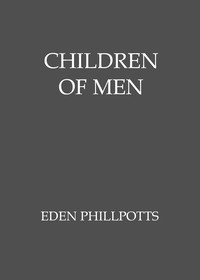
For Children of men — Text and Context, the stored edition analysis reports 155,016 words, 11 hr 14 min estimated reading time, and 13 detected text sections.
The text analysis averages about 15.6 words per sentence, while the detected sections provide another way to judge how the source is divided.
Project Gutenberg metadata also associates the work with “Country life -- England -- Fiction,” connecting these edition facts with the source record’s subject description.
Explore this collection
These alternatives are selected using recorded categories and estimated reading time.
About 661 minutes
Historical Psychological Social Fiction
151,815 recorded words. 13 minutes difference from this book's estimate.
View Gutenberg source #69809About 699 minutes
Historical Psychological Social Fiction
160,752 recorded words. 25 minutes difference from this book's estimate.
View Gutenberg source #74706About 719 minutes
Historical Psychological Social Fiction
165,238 recorded words. 45 minutes difference from this book's estimate.
View Gutenberg source #69952Search stored excerpts and compare books → Choose by your preferences →
Choices use stored catalog measurements. Estimates vary with reading speed. A shared category is a catalog label, not a claim that two books have the same argument or literary quality.
Search reads excerpt text stored with this catalog and links to its associated Gutenberg record. The connection is stored in the site database; this tool does not recheck that every excerpt is word-for-word identical to that external record. Excerpt search does not cover every chapter and does not verify historical publication dates.
Catalog snapshot checked: 2026-09-26. Coverage: 100 public books, 100 available source excerpts.
Calculated from edition completeness, EPUB availability, text structure and catalogue metadata. Not a user rating.
Total of 100 points, scaled to a 2.5-5.0 range. Editions with an empty description or a missing EPUB file are not scored.
Public-domain source text
The source text is kept in the dedicated reader, separate from this catalogue record and its commentary.
Eden Phillpotts's Children of Men concludes a series begun with Children of the Mist thirty years earlier, as he states in the foreword. The novel is set on Dartmoor and centers on the aftermath of a trial, focusing on the moral and emotional reckoning between two men: Jacob Bullstone, who has wronged Adam Winter, and Winter himself. The excerpted dialogue shows Bullstone seeking forgiveness while Winter, though granting it, insists on the irrevocable nature of the harm done. Phillpotts uses this confrontation to explore themes of guilt, atonement, and the persistence of consequences.
Phillpotts's diction in the dialogue between Bullstone and Winter is deliberately plain, yet charged with moral weight. Bullstone speaks of 'abiding sorrow and grief' and 'basely wronged,' using formal, almost legalistic language that underscores his self-conscious performance of repentance. Winter's response is more terse and resigned: 'I forgive you, Jacob Bullstone. That's easy enough.' The simplicity of 'easy enough' contrasts with the gravity of the situation, hinting at Winter's emotional exhaustion. Phillpotts avoids melodrama; instead, the characters' word choices reveal their inner states—Bullstone's need for absolution and Winter's weary acknowledgment that forgiveness does not undo the past.
The dialogue structure highlights an asymmetry in how the two men experience guilt. Bullstone dominates the conversation, offering promises and seeking to 'be the only one to suffer now.' Winter, however, corrects him: 'What you've done don't end with yourself... It's altered the very stuff of life for a score of people.' Phillpotts gives Winter the longer, more animated speech when he finally pushes back, using the metaphor of poison to describe the spread of harm. The voices are distinct—Bullstone's self-absorbed, Winter's more encompassing—and the exchange reveals that Bullstone's repentance is still partly about himself, while Winter sees the broader damage.
Though the excerpt is almost entirely dialogue, the setting is implied through references to Shipley and the characters' rural lives. Winter mentions his 'sheep-dog' and the cost of leaving his family, grounding the conflict in a farming community on Dartmoor. Phillpotts's foreword describes the novel as part of a series set in this 'small theatre,' and the dialogue's rhythms—with its 'yes, yes' and 'good-bye'—echo the cadences of Devon speech. The landscape is not described directly here, but the characters' references to 'the past' flowing 'like a river' and the 'fag end of my life' evoke a world shaped by natural cycles and long memories.
The excerpt ends with Winter cutting off Bullstone's mention of his wife, saying 'Please don't talk about her to me.' This abrupt halt mirrors the novel's structural interest in what remains unsaid. Phillpotts builds the scene around a single, tense interview, but the dialogue circles without resolution: Bullstone wants Winter to intercede with his wife, but Winter refuses. The foreword frames the novel as the culmination of a thirty-year project, and this scene suggests that closure is elusive. The structure of the dialogue—with its starts, stops, and interruptions—reflects the difficulty of moral repair, a theme Phillpotts treats with restraint.
Readers should attend to how Phillpotts uses dialogue to convey moral complexity without authorial commentary. The foreword offers a philosophical key, but the fiction itself works through implication and understatement. The excerpt suggests that Children of Men rewards attention to what characters say—and what they leave unsaid—as they navigate guilt, forgiveness, and the enduring consequences of their actions on Dartmoor.
Reading the standoff between Bullstone and Winter, I remembered sitting with my grandfather after a long silence—how forgiveness felt less like a door and more like a slow tide. That same weight returned in Dusty answer — Key Ideas to Explore, where guilt lingers in the spaces between words, not explosive but patient. Both books hold that quiet poison, and I let it sit unresolved.
Save your reaction, strongest insight, and memorable passage.