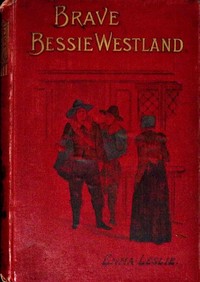
Brave Bessie Westland — A Reader’s Guide

(0 User reviews)   515
Leslie, Emma, 1838-1909 Project Gutenberg 2023 Not confirmed
Historical fiction; Great Britain -- History -- Charles II, 1660-1685 -- Fiction; Quakers -- Fiction Readers of public-domain and historical texts
Project Gutenberg digital edition en

Edition facts

Words 28,449
Reading time 124 min
Text sections 4

The catalog record for Brave Bessie Westland — A Reader’s Guide provides practical reading context through 28,449 words, 2 hr 4 min estimated reading time, and 4 detected text sections.

The text analysis averages about 29.6 words per sentence, while the detected sections provide another way to judge how the source is divided.

Project Gutenberg metadata also associates the work with “Historical fiction,” connecting these edition facts with the source record’s subject description.

Explore this collection

Compare your next read

These alternatives are selected using recorded categories and estimated reading time.

Search stored excerpts and compare books → Choose by your preferences →

How these choices and excerpts are prepared

Choices use stored catalog measurements. Estimates vary with reading speed. A shared category is a catalog label, not a claim that two books have the same argument or literary quality.

Search reads excerpt text stored with this catalog and links to its associated Gutenberg record. The connection is stored in the site database; this tool does not recheck that every excerpt is word-for-word identical to that external record. Excerpt search does not cover every chapter and does not verify historical publication dates.

Catalog snapshot checked: 2026-09-26. Coverage: 100 public books, 100 available source excerpts.

Emma Leslie's 1893 novel follows Bessie Westland as she hides in a cellar while a mob ransacks her Quaker home, then moves through London's tense Restoration-era streets. The narrative shifts between domestic interiors and outdoor spaces, using whispered dialogue and sudden threats to evoke the constant danger of religious persecution.
Share
Editorial Edition Score 4.6/5

Calculated from edition completeness, EPUB availability, text structure and catalogue metadata. Not a user rating.

How this score is calculated
  • Description quality20 pts
  • Title & short description10 pts
  • Source metadata20 pts
  • Text length15 pts
  • Chapters / structure15 pts
  • EPUB file integrity20 pts

Total of 100 points, scaled to a 2.5-5.0 range. Editions with an empty description or a missing EPUB file are not scored.

Edition quality

Public-domain source text

Read the source text

The source text is kept in the dedicated reader, separate from this catalogue record and its commentary.

The novel opens not with a panoramic view of Restoration London but with a whisper in a cellar. Bessie Westland hushes her sister Dorothy, her voice catching in a 'gasping sob' as she tries to calm the younger children. The mob above shouts 'Down with the Quakers!' and the sound of breaking furniture fills the dark space. Emma Leslie builds tension through sensory details: the cellar door string in Bessie's hand, the trembling bodies of the sisters, and the hoarse voice of a man who stands with his back against their hiding place. This confined opening establishes a pattern of movement between cramped interiors and the threatening streets outside.

Cellars, Streets, and the Threat of Exposure

The first chapter repeatedly places characters in enclosed spaces that are vulnerable to intrusion. Bessie and her sisters huddle in the cellar, listening to the destruction of their home. Later, the narrative moves to Dame Drayton's house, where the family speaks in hushed tones about their Quaker faith, aware that 'prentice lads suspect we are Quakers.' Leslie uses these domestic interiors as pressure chambers: the safety of home is always provisional, always about to be breached. The street outside is a space of hostile voices and sudden violence, as when the mob shouts threats or when Sim Tompkins's mother learns of the Draytons' beliefs. The novel's structure alternates between these two poles—the fragile refuge of the home and the dangerous public sphere—creating a rhythm of retreat and exposure.

Whispered Conversations and the Weight of Silence

Leslie's dialogue is often pitched at a whisper, conveying both intimacy and fear. Bessie's first words—'Hush, hush, Dorothy! Thee must not cry'—establish a pattern of speech that is urgent yet constrained. In the Drayton household, conversations about persecution are conducted in low voices, with characters like Dame Drayton speaking 'with a sigh' or 'clasping her hands, while the tears slowly filled her eyes.' The Quaker use of 'thee' and 'thou' marks the characters as outsiders, but it also creates a distinct verbal texture that sets them apart from the mob's rough shouts. Silence itself becomes a tactic: the children must not cry, the adults must not 'publish abroad' their faith. Leslie uses these vocal contrasts to dramatize the constant negotiation between speaking truth and staying safe.

The River Garden and the Promise of America

Midway through the excerpts, the setting shifts to a river garden, where Master Drayton ponders a plan to settle Quakers in America. This outdoor space offers a temporary respite from the cramped interiors of the earlier chapters. The garden is associated with the character of Sir William Penn, who is described as 'rich' and possessing 'many waste lands out in the plantations of America.' The conversation between Master Drayton and his wife moves from the immediate danger of persecution to a speculative future: 'On this land some of us might go and settle.' Leslie uses this scene to introduce a geographical escape route, contrasting the narrow streets of London with the imagined freedom of the American wilderness. The river garden thus becomes a symbolic threshold between confinement and possibility.

Movement Between Households and the Network of Sympathy

The narrative structure relies on characters moving from one household to another, creating a web of connections among Quaker families. Bessie and her sisters are taken in by the Draytons; Audrey Lowe arrives with a warning from her mother; Master Drayton visits Sir William Penn. These movements are not merely logistical but emotional: each transfer of a character carries news, fear, or hope. Dame Drayton's sister Annie is described as 'feeble and timorous,' having chosen 'the path of the coward' by conforming to the state church. The contrast between Annie's timidity and Bessie's bravery is established through these household visits. Leslie uses the physical journey from one home to another to map the social geography of persecution, showing how fear and solidarity travel along the same routes.

Readers should attend to the way Leslie builds suspense through spatial confinement and release. The novel's short chapters and frequent shifts between interior and exterior scenes create a pace that mirrors the characters' precarious existence. The excerpts do not reveal whether Bessie's parents survive or whether the American plan succeeds, but the pattern of whispered fear and sudden danger is consistent throughout. This is a story told in close-up, where a cellar door string or a neighbour's loose tongue can determine a family's fate.

There’s something about Bessie’s whispered fear in that cellar—how a room can hold both terror and safety at once—that lingers long after finishing. I found myself thinking of it again while flipping through Illustrations of political economy, Volume 3 (of 9) — Edition Insights, where the quiet economics of daily survival feel similarly pressed against larger, unsteady forces. Old books keep these echoes so gently.

There are no reviews for this eBook.

0
0 out of 5 (0 User reviews )

Add a Review

Your Rating *
There are no comments for this eBook.

Reader reflection

Take a moment to reflect on this book

Create a short personal record of your experience with this book.

Your progress 0 / 10
1

Which reading stage best describes you?

2

Did this book hold your interest?

3

How likely are you to recommend this book?

4

Did the language feel accessible?

Related eBooks