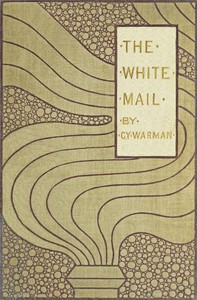
The White Mail opens not with a train but with a watchman's shanty and a mule walking sideways. Cy Warman establishes a world where the railroad's rhythms are measured by the white flag shown to the morning mail train and the white light held up for the Midnight Express. The first chapter introduces Denis McGuire, an illiterate section boss who cannot write his own name, and his son Tommy, a round-faced boy who sings 'The Hat Me Father Wore' while trudging after the mule. The setting—Lick Skillet, twenty-two miles east of St. Louis—is sketched with precise, unglamorous detail: a sawmill, a blacksmith shop, twenty-seven souls including the bull-team driver. Warman's voice is plain and direct, attentive to the small transactions of railroad life, such as McGuire doing odd jobs for the station agent in exchange for bookkeeping.
From Section Hand to Telegraph Operator
The early chapters trace Tommy McGuire's rise through the railroad hierarchy. After his father's death—signaled by the chapter title 'Again the Reaper'—Tommy takes on responsibilities that include flagging the White Mail. The excerpts show him learning telegraphy, a skill that becomes his ticket westward. Warman devotes a chapter to McGuire's telegraph lessons, and by Chapter XIV he is station-master at Plainfield, a remote outpost on the desert. The progression is methodical: each chapter marks a new duty or challenge, from requisitioning supplies to hoisting a flag. The novel's structure mirrors the incremental advancement of a railroad career, with each step earned through demonstrated competence.
The Desert Station and Its Dangers
At Plainfield, the narrative shifts from domestic railroad life to frontier survival. McGuire's isolation is underscored by two extended set pieces: a buffalo hunt and an encounter with Sioux warriors. In the buffalo episode, Warman describes the 'roar of ten thousand feet beating the desert' and the agent firing wildly into the herd, only to find a calf killed by collision with the water tank. The wolves that follow are 'snapping and fighting over the feast,' pressing so close that McGuire must flee to the station. The Sioux chapter builds tension through careful pacing: a speck on the horizon, two horsemen approaching, a standoff at the station door. McGuire's response—firing from multiple port-holes to suggest a larger force—shows his resourcefulness under threat.
Warman's Use of Telegraphy as Plot Device
Telegraphy is not merely a skill McGuire acquires; it becomes the novel's central mechanism for communication and suspense. When the Sioux surround the station, McGuire 'called Kearney and told them that he was being surrounded.' The message is described as 'Macedonian,' a term that suggests desperate urgency. The operator's subsequent silence leads everyone to believe McGuire has been killed. Warman, himself a former railroad telegrapher, uses the telegraph to create dramatic irony: the reader knows McGuire is alive and fighting, but the outside world does not. This gap between local action and remote knowledge drives the tension, and the telegraph key becomes as important as any rifle in the story.
Voice and Detail in the Railroad Milieu
Warman's prose is lean and observational, favoring concrete nouns over abstraction. The watchman's shanty is 'narrow, high, and painted red, like the tank.' The mule appears 'always to be going sidewise, as a boar goes to battle.' These similes are homely but exact, drawn from rural and railroad life. Dialogue is sparse; the narrative relies on action and description. The catalog of chapter titles—'Snowbound,' 'Breaking the Trail,' 'Over the Big Bridge'—suggests a series of physical tests rather than psychological introspection. Warman's background as a railroad journalist informs the authenticity of the setting, but he never lectures; the details emerge through the characters' work and survival.
Readers approaching The White Mail for the first time will find a novel that moves briskly through episodic challenges, each chapter building on the last. The excerpts suggest that Warman is less interested in character interiority than in the pressures of environment and occupation. Pay attention to the recurring motifs of light and flag signals, the telegraph's role in bridging isolation, and the way the landscape—from Lick Skillet's creek to the desert plain—shapes every action. The book rewards attention to its small, precise details of railroad work.
I keep thinking about how The White Mail left me with that odd ache of solitude—the way Tommy’s telegraph clicks were the only voice for miles. The Massarenes — Text and Context carries a similar quiet weight, though its loneliness is less prairie wind and more drawing-room hush. Strange how different settings can hold the same feeling of being unheard.