About 377 minutes
Lady Molly of Scotland Yard — Inside the Classic
Science Fiction Utopias
86,693 recorded words. 5 minutes difference from this book's estimate.
View Gutenberg source #72581
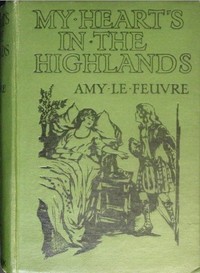
The catalog record for My heart's in the Highlands — Story, Setting & Ideas provides practical reading context through 87,673 words, 6 hr 22 min estimated reading time, and 8 detected text sections.
The text analysis averages about 13.1 words per sentence, while the detected sections provide another way to judge how the source is divided.
Project Gutenberg metadata also associates the work with “Christian life -- Fiction,” connecting these edition facts with the source record’s subject description.
Explore this collection
These alternatives are selected using recorded categories and estimated reading time.
About 377 minutes
Science Fiction Utopias
86,693 recorded words. 5 minutes difference from this book's estimate.
View Gutenberg source #72581About 365 minutes
Science Fiction Utopias
83,796 recorded words. 17 minutes difference from this book's estimate.
View Gutenberg source #72891About 403 minutes
Science Fiction Utopias
92,568 recorded words. 21 minutes difference from this book's estimate.
View Gutenberg source #72356Search stored excerpts and compare books → Choose by your preferences →
Choices use stored catalog measurements. Estimates vary with reading speed. A shared category is a catalog label, not a claim that two books have the same argument or literary quality.
Search reads excerpt text stored with this catalog and links to its associated Gutenberg record. The connection is stored in the site database; this tool does not recheck that every excerpt is word-for-word identical to that external record. Excerpt search does not cover every chapter and does not verify historical publication dates.
Catalog snapshot checked: 2026-09-26. Coverage: 100 public books, 100 available source excerpts.
Calculated from edition completeness, EPUB availability, text structure and catalogue metadata. Not a user rating.
Total of 100 points, scaled to a 2.5-5.0 range. Editions with an empty description or a missing EPUB file are not scored.
Public-domain source text
The source text is kept in the dedicated reader, separate from this catalogue record and its commentary.
The novel opens with a sharp contrast between Rowena Arbuthnot's mischievous eyes—described as always seeming to twinkle with some hidden joke—and the grave circumstances that force her to forgo a journey to the East. A riding accident has left her facing a year of convalescence, and the first chapter establishes a pattern of movement between interior and exterior spaces: Rowena leans in from the garden to speak to her sister-in-law, a gesture that literalizes her position on the threshold of domestic life. The narrative voice, filtered through Rowena's perspective, is marked by a wry, self-deprecating tone that resists sentimentality even when discussing disappointment.
The story repeatedly positions characters at windows, doorways, and garden edges. Rowena's first appearance has her leaning on a wide windowsill, looking in from the garden—a posture that recurs when she later observes the Highland landscape from her new lodgings. These thresholds mark moments of transition: between health and illness, between social worlds, between faith and doubt. The doctor's verdict that she must 'lie low for a year' confines her physically, yet the narrative continually returns to open windows and outdoor vistas, suggesting a tension between enforced stillness and the desire for movement. Even the title, borrowed from a song, implies a longing for a place not currently inhabited.
Much of the novel's substance emerges through extended conversations. The excerpt featuring Mrs. Burke's confession—a monologue that traces her journey from a devout childhood to a worldly marriage—is one of several such set pieces. Rowena listens more than she speaks, and her responses are often brief or noncommittal. The dialogue is structured as a series of revelations: characters disclose their pasts, their regrets, and their beliefs, while Rowena's own history remains partially veiled. This asymmetry creates a dynamic where Rowena functions as a confidante, drawing out others' stories while guarding her own. The conversations are not merely expository; they dramatize the clash between different value systems—religious devotion versus worldly pleasure, sincerity versus performance.
Rowena's eyes are described as 'blue-grey' and 'always seemed to twinkle with some hidden joke.' This detail is introduced in the first paragraph and echoed throughout the excerpts. The eyes become a motif for a private self that remains inaccessible to other characters. When Geraldine complains that she cannot understand Rowena, the reader is reminded that the eyes betray a laughter that the lips suppress. Similarly, Mrs. Burke's confession is prompted by something in Rowena's manner—'What is it about you that makes me talk so?'—suggesting that Rowena's gaze invites intimacy even as it conceals. The motif of hidden laughter recurs in the contrast between Rowena's 'grave' lips and her 'gleam of hidden laughter,' a split that the narrative never fully resolves.
The novel's structure moves Rowena from the comfortable but confining home of her brother and sister-in-law to the unfamiliar setting of the Scottish Highlands. The table of contents reveals a three-book structure: Book I ends with 'Departure,' Book II begins 'At the Green Cottage,' and Book III introduces new characters like Hector Ross and Rowena's rival, Rowena's Power. This geographical shift is also a social one. In the excerpts, Rowena encounters the devout MacDonald family, whose piety contrasts with the worldly Mrs. Burke. The narrative does not privilege one world over the other; instead, it places Rowena between them, allowing her to observe without committing. The Highland setting is not merely backdrop but a space where different ways of living are tested and compared.
Readers attentive to the novel's structure will notice how the three-book division mirrors Rowena's physical and emotional journey: from enforced stillness to active engagement, from listener to participant. The recurring images of windows, eyes, and laughter invite a reading that attends to what is left unsaid. The excerpts offer no resolution to the central tensions—between faith and doubt, sincerity and performance—but they establish a pattern of contrasts that the full text likely develops.
Sometimes a book stays with you like a place you once rested—Rowena’s quiet year in the Highlands felt that way, her hidden humor surfacing between long walks and borrowed company. I found myself thinking of The story of Don Miff — Reading Notes afterward, how both stories hold that same tender ache of learning to be still with yourself. It lingers gently, without asking anything of you.
A brief reflection can help important ideas stay with you longer.