About 455 minutes
Catherine herself — Inside the Classic
Science Fiction Utopias
104,599 recorded words. 1 minutes difference from this book's estimate.
View Gutenberg source #71786
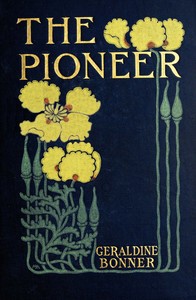
This digital edition of The pioneer — Reading Companion is described by source-level measurements including 104,821 words, 7 hr 36 min estimated reading time, and 46 detected text sections.
The text analysis averages about 16.3 words per sentence, while the detected sections provide another way to judge how the source is divided.
Project Gutenberg metadata also associates the work with “Western stories,” connecting these edition facts with the source record’s subject description.
Explore this collection
These alternatives are selected using recorded categories and estimated reading time.
About 455 minutes
Science Fiction Utopias
104,599 recorded words. 1 minutes difference from this book's estimate.
View Gutenberg source #71786About 416 minutes
Science Fiction Utopias
95,675 recorded words. 40 minutes difference from this book's estimate.
View Gutenberg source #75281About 410 minutes
Science Fiction Utopias
94,210 recorded words. 46 minutes difference from this book's estimate.
View Gutenberg source #69435Search stored excerpts and compare books → Choose by your preferences →
Choices use stored catalog measurements. Estimates vary with reading speed. A shared category is a catalog label, not a claim that two books have the same argument or literary quality.
Search reads excerpt text stored with this catalog and links to its associated Gutenberg record. The connection is stored in the site database; this tool does not recheck that every excerpt is word-for-word identical to that external record. Excerpt search does not cover every chapter and does not verify historical publication dates.
Catalog snapshot checked: 2026-09-26. Coverage: 100 public books, 100 available source excerpts.
Calculated from edition completeness, EPUB availability, text structure and catalogue metadata. Not a user rating.
Total of 100 points, scaled to a 2.5-5.0 range. Editions with an empty description or a missing EPUB file are not scored.
Public-domain source text
The source text is kept in the dedicated reader, separate from this catalogue record and its commentary.
The novel opens with a precise temporal and spatial marker: the Colonel has been riding since five in the morning, and at almost five in the evening he pauses under a live-oak. The landscape is rendered in dry, painterly terms—"ocher yellow" grass, a "faded mirage" of the Sierra, a "sea-like expanse swimming in opalescent tints." Bonner's narrator attributes a thought to the Colonel: "It was like looking at a picture." This early gesture toward the visual, combined with the stillness and the horse's name (Kit Carson), establishes a Western setting that is both real and consciously composed.
The subtitle "A Tale of Two States" is literal: Book I is set in "The Country" (California), Book II in "The Town" (San Francisco), and Book III in "The Desert" (Nevada). The excerpts shift from the Colonel's solitary ride—a man alone in a vast, silent landscape—to Mercedes Gracey's social world, where chaperones, croquet grounds, and French dresses dominate. The contrast is structural: the first chapter's open road gives way to drawing-room intrigues. Bonner uses the two settings to explore different kinds of pioneering: the Colonel's physical traversal of space versus Mercedes's social ascent. The Nevada section, hinted at in the table of contents, likely brings these threads together.
Mercedes Gracey is introduced through her desire to live "like an English novel." She questions Lionel Harrower about his Elizabethan manor house and imagines herself as "its conquering heroine." This self-conscious literary framing is notable: Bonner has her character model her aspirations on fiction. The excerpts also show Mercedes's inexperience—she has never received an offer of marriage—and her father's protective instructions to her chaperone. The narrator notes that Lionel finds California more interesting than any single person, a detail that undercuts Mercedes's certainty. Readers should watch for how Bonner handles the gap between Mercedes's romantic script and the actual course of events.
The Colonel, introduced in the opening pages, is a figure of stillness and observation. He rides through a landscape described as "dream-like" and "strange," and his only action in the excerpt is to look at his watch and survey the view. His horse is named after the frontiersman Kit Carson, linking him to a historical West. Yet the Colonel himself remains opaque: we are told his thoughts only once ("It was like looking at a picture"). This restraint suggests a character defined by his environment rather than interiority. In contrast, Mercedes's section is dense with social detail and psychological motivation. The novel may be building toward a collision between these two modes of being—the silent observer and the social performer.
Bonner devotes considerable attention to the California landscape: the "lazy undulations" of the foothills, the "deep in dust" road, the "faint, aërial vision" of the Sierra. The description is precise and sensory, but also deliberately static—the scene is "like looking at a picture." This painterly quality recurs in the Tres Pinos section, where the estate is described as a "show place" with velvet turf and scented drawing-rooms. The Nevada desert, promised in Book III, will likely offer a third landscape, harsher and more barren. Readers attuned to Bonner's descriptive patterns will notice how each setting shapes the characters' possibilities: the open road allows solitude, the estate enables social performance, and the desert may strip both away.
The excerpts jump from the Colonel's ride to Mercedes's European travels and her summer at Tres Pinos. We do not see how the Colonel reaches his destination, nor do we learn the connection between these two plotlines. The table of contents hints at a romance triangle: chapters titled "The Old Love," "The Choice of Maids," and "A Woman's 'No'" suggest romantic conflict. The illustration list names three women—June, Mercedes, Rosamund—and one man, the Colonel. Readers should note that the opening chapter is called "The Squatter," a term that implies contested land claims. The novel may intertwine territorial and romantic possession, with the Colonel and Mercedes representing different forms of claim-staking.
Bonner's novel rewards attention to its structural symmetries: the solitary male traveler versus the socially embedded female aspirant, the open landscape versus the enclosed estate, the painterly description versus the novelistic plot. The excerpts offer only fragments of a larger design, but they establish a clear tension between stillness and movement, observation and performance. Readers may find it useful to track how each character's relationship to place—California, San Francisco, Nevada—shapes their choices and limitations.
Your answers remain private and are stored only in this browser.