About 105 minutes
The boy who brought Christmas — Inside the Classic
Science Fiction Utopias
24,112 recorded words. 25 minutes difference from this book's estimate.
View Gutenberg source #70273
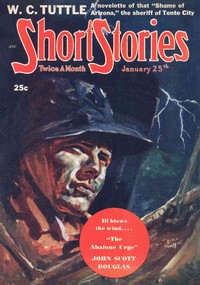
Henry goes prehistoric — A Reader’s Guide can be approached with a clearer sense of reading commitment from its source measurements: 18,316 words, 1 hr 20 min estimated reading time, and 2 detected text sections.
The text analysis averages about 12.0 words per sentence, while the detected sections provide another way to judge how the source is divided.
Project Gutenberg metadata also associates the work with “Western stories,” connecting these edition facts with the source record’s subject description.
Explore this collection
These alternatives are selected using recorded categories and estimated reading time.
About 105 minutes
Science Fiction Utopias
24,112 recorded words. 25 minutes difference from this book's estimate.
View Gutenberg source #70273About 140 minutes
Science Fiction Utopias
32,112 recorded words. 60 minutes difference from this book's estimate.
View Gutenberg source #74696About 149 minutes
Science Fiction Utopias
34,233 recorded words. 69 minutes difference from this book's estimate.
View Gutenberg source #69333Search stored excerpts and compare books → Choose by your preferences →
Choices use stored catalog measurements. Estimates vary with reading speed. A shared category is a catalog label, not a claim that two books have the same argument or literary quality.
Search reads excerpt text stored with this catalog and links to its associated Gutenberg record. The connection is stored in the site database; this tool does not recheck that every excerpt is word-for-word identical to that external record. Excerpt search does not cover every chapter and does not verify historical publication dates.
Catalog snapshot checked: 2026-09-26. Coverage: 100 public books, 100 available source excerpts.
Calculated from edition completeness, EPUB availability, text structure and catalogue metadata. Not a user rating.
Total of 100 points, scaled to a 2.5-5.0 range. Editions with an empty description or a missing EPUB file are not scored.
Public-domain source text
The source text is kept in the dedicated reader, separate from this catalogue record and its commentary.
The opening scene sets the tone with a theatrical display of temper: Judge Van Treece hurls his dog-eared Shakespeare across the office, and Sheriff Henry Harrison Conroy retrieves it with a calm remark. The dialogue immediately establishes the pair's contrasting personalities—Judge, tall and dramatic, given to hollow declarations about pride and soul; Henry, short and round, with a nose famous from vaudeville, speaking in mock-heroic phrases like "Keepers of the Peace." Their banter about a scathing editorial from the Clarion and the "damnable riff-raff" drawn by gold strikes introduces the central conflict: a crime wave that the commissioners think they cannot handle.
Henry Harrison Conroy is described in precise physical detail: barely five foot seven, built like Humpty Dumpty, with a moon face, small eyes, and a nose "that ever gleamed above the footlights in vaudeville." This nose is not just a feature but a career—it had been "featured" across vaudeville chains. The narrator dwells on this with deadpan exaggeration, suggesting Henry's past as a performer. His speech is equally distinctive: he uses elevated, almost Shakespearean phrasing ("Let us look calmly upon the matter at hand") while discussing mundane complaints. This contrast between his dignified language and the absurd situations—like retrieving a thrown book or calming a ranting deputy—creates the book's comic rhythm.
The middle excerpt introduces Professor Charles Winston Norbert, called "Professor Fossil" by the locals. He is found after a wagon accident, dressed in a black suit, white shirt, and high starched collar—a figure of civilization in the Wild West. The accident is described with grim humor: Slim remarks that the professor and editor Pelly were "lucky to get off on the right side" of the curve, adding "you could be a-fallin' yet." The professor's precious cargo—two large boxes of fossil-bearing rocks, totaling five hundred pounds—plunges into Lobo Canyon. This loss is treated seriously by Henry ("Oh, that's too bad!") but undercut by the surrounding banter about hand-talk in the dark and Oscar's lament about losing "de yug."
Tuttle's dialogue often functions like slapstick: characters interrupt each other, repeat phrases, and react with exaggerated bewilderment. When Judge says he has a notion of resigning, Henry replies with a mock-soliloquy about "pride and soul; resignation—no!" The editor Pelly is described as a "chuckleheaded nincompoop" whose editorial has been read aloud to the commissioners—a humiliation that drives the plot. In the later scene, Slim's deadpan lines ("Don't talk with yore hands, 'cause we can't read no hand-talk in the dark") and Oscar's mangled English ("Das is the lousiest deal Ay ever had") keep the tone light even during a serious accident. The characters' voices are distinct, with Henry's formal register clashing against the others' colloquial speech.
The story is set in Tonto City and Wild Horse Valley, a frontier town overrun by gold-rush newcomers. The excerpts move from an indoor argument to a nighttime wagon ride and accident, then to a doctor's office. The canyon Lobo is mentioned as a difficult place to recover the lost fossils, hinting at future action. The structure relies on a series of comic mishaps: a thrown book, a wagon crash, a lost collection. The excerpts do not reveal whether the fossils are recovered or how the crime wave is resolved, but they establish a pattern of escalating absurdity. The narrator's voice is omniscient but focused on physical description and dialogue, with little interiority.
Readers should pay attention to how Henry's vaudeville background informs his problem-solving—his theatrical instincts may be as important as his sheriff's badge. The lost fossil collection is a MacGuffin that drives the second half, but the real pleasure is in the verbal sparring and physical comedy. The excerpts suggest a fast-paced, episodic narrative where every scene ends with a punchline or a pratfall.
That bit where Henry and Van Treece argue over a fossil while the wagon teeters—it stayed with me, that blend of slapstick and something quieter. It reminded me of another read, Rhoda of the Underground — A Reader’s Guide, where the chaos also hides a tender undercurrent. Some stories just sit with you, like a half-forgotten joke that still makes you smile.
Your answers remain private and are stored only in this browser.