
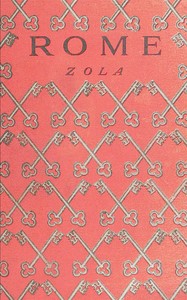
The Three Cities Trilogy: Rome, Complete by Émile Zola
If you think a novel about a priest in Rome sounds quiet, think again. Émile Zola, the master of gritty realism, turns his unflinching eye on the eternal city and the soul of a single man. 'Rome' is the second book in his Three Cities trilogy, but it stands powerfully on its own.
The Story
We meet Pierre Froment, a young French priest haunted by the suffering he sees in the modern world. He’s written a book arguing that the Church must abandon old dogma and become a force for social justice, a return to the simple charity of early Christianity. Full of hope, he travels to Rome to get the Pope’s approval. What follows is a masterclass in disillusionment. Pierre is plunged into the dizzying world of the Vatican—a place of stunning beauty, secret intrigues, and endless committees. He meets cardinals fighting for influence, diplomats playing long games, and everyday Romans just trying to live. As he navigates this maze, his naive mission collides with the immovable reality of an ancient institution. The plot isn't about chases or murders; it's the suspense of watching an idealist wrestle with a system designed to absorb and neutralize change.
Why You Should Read It
I was gripped by Pierre’s inner battle. Zola makes you feel his feverish hope and his slow, crushing doubt. This isn't an attack on faith; it's a painfully honest look at what happens when pure belief meets the complicated machinery of power. The city itself is a character—you can almost smell the incense and feel the cool marble of the basilicas. Zola’s detail is incredible, from the opulence of a cardinal’s palace to the poverty in the shadows of Saint Peter’s. It’s a historical snapshot, but the core struggle feels timeless: How do you change something that doesn't want to be changed? Can you fix a system from the inside, or does it end up changing you?
Final Verdict
This book is perfect for readers who love rich historical settings and deep character studies. If you enjoyed the political maneuvering in Wolf Hall or the spiritual quest in Silence, you’ll find a lot to love here. It’s for anyone who’s ever asked big questions about faith, power, and where we place our hope in a flawed world. Fair warning: it’s a dense, thoughtful read, not a light page-turner. But if you let yourself get lost in Pierre’s Rome, you’ll come away with plenty to think about long after the last page.
This masterpiece is free from copyright limitations. Knowledge should be free and accessible.
Karen Jackson
1 year agoOne of the most comprehensive guides I've read this year.
Margaret Lee
1 year agoGiven the current trends in this field, the cross-referencing of different chapters makes it a great study tool. I’ll definitely be revisiting some of these chapters again soon.
Patricia Lopez
6 months agoI found the data interpretation to be highly professional and unbiased.
Nancy Rodriguez
10 months agoI started reading this with a critical mind, the nuanced approach to the central theme was better than I expected. It cleared up a lot of the confusion I had previously.
Elizabeth Wilson
5 months agoRight from the opening paragraph, the author doesn't just scratch the surface but goes into meaningful detail. It’s hard to find this much value in a single source these days.