
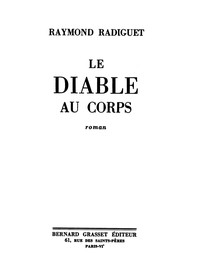
Le Diable au Corps: Roman by Raymond Radiguet
Published in 1923, Le Diable au Corps caused an immediate scandal. What's truly wild is that its author, Raymond Radiguet, wrote it when he was just a teenager. He died at 20, leaving behind this one perfect, troubling novel that feels like it was written yesterday.
The Story
The story is simple on the surface. It's World War I. Our unnamed narrator is a clever, restless 16-year-old boy. He meets Marthe, a young woman a few years older, who is engaged to a soldier at the front. They begin a secret, passionate affair. As the war grinds on, her fiancé becomes her husband—in name only, as he's still away fighting. The narrator and Marthe's relationship deepens, becoming a whole secret life built on letters, lies, and stolen moments. The central, agonizing tension isn't really about whether they'll get caught. It's about watching this young man navigate a profound experience with the emotional maturity of, well, a teenager. He's in love, but he's also selfish, cruel, and fascinated by his own power over the situation.
Why You Should Read It
You should read this because it refuses to play by the rules. The narrator is not a good person, and Radiguet doesn't try to make him one. He's a kid playing at being a man in a world where all the real men are gone. The book isn't about the romance of war; it's about the vacuum it leaves behind. In that empty space, raw human nature—selfish, desiring, and amoral—runs wild. Marthe is often seen through his eyes, which makes her more mysterious. Is she a victim? A willing participant? The genius is that Radiguet lets you sit with that discomfort. The prose is clean, sharp, and deceptively simple, which makes the emotional blows land even harder.
Final Verdict
This book is perfect for anyone tired of straightforward love stories or predictable historical fiction. It's for readers who don't need likable characters but demand fascinating ones. If you enjoyed the moral ambiguity of Patricia Highsmith's characters or the charged, atmospheric tension of a film like 'The Dreamers,' you'll find a kindred spirit in Radiguet. It's a short, concentrated shot of brilliance—a reminder that some of the most adult stories about desire, guilt, and consequence can be told by the young.
This title is part of the public domain archive. You do not need permission to reproduce this work.
Aiden Jackson
1 year agoAs someone who reads a lot, the depth of research presented here is truly commendable. Definitely a 5-star read.
Donna Jones
2 years agoRecommended.







Sandra Garcia
10 months agoFinally a version with clear text and no errors.